
Description
Introduction to Sarora Village
Sarora is a peaceful and culturally rich village located in the Marh Block and Marh Tehsil of Jammu District in the Union Territory of Jammu and Kashmir, India. The village is governed by its own Gram Panchayat and lies approximately 8 kilometres from Jammu city. Known for its agricultural landscape, religious significance, and close-knit community, Sarora represents the traditional rural lifestyle of the Jammu region while gradually embracing modern infrastructure and development.
Geographical Location and Administrative Profile
Sarora is spread across a geographical area of approximately 199.5 hectares. The village falls under the Marh Assembly Constituency and the Jammu Parliamentary Constituency, ensuring representation at both the state and national levels. Administratively, it is part of the Marh Block and Marh Tehsil and has been assigned the 2011 Census Code 005831. The official PIN Code of the village is 180002, making it part of the postal network serving the Jammu region.
Gram Panchayat and Local Governance
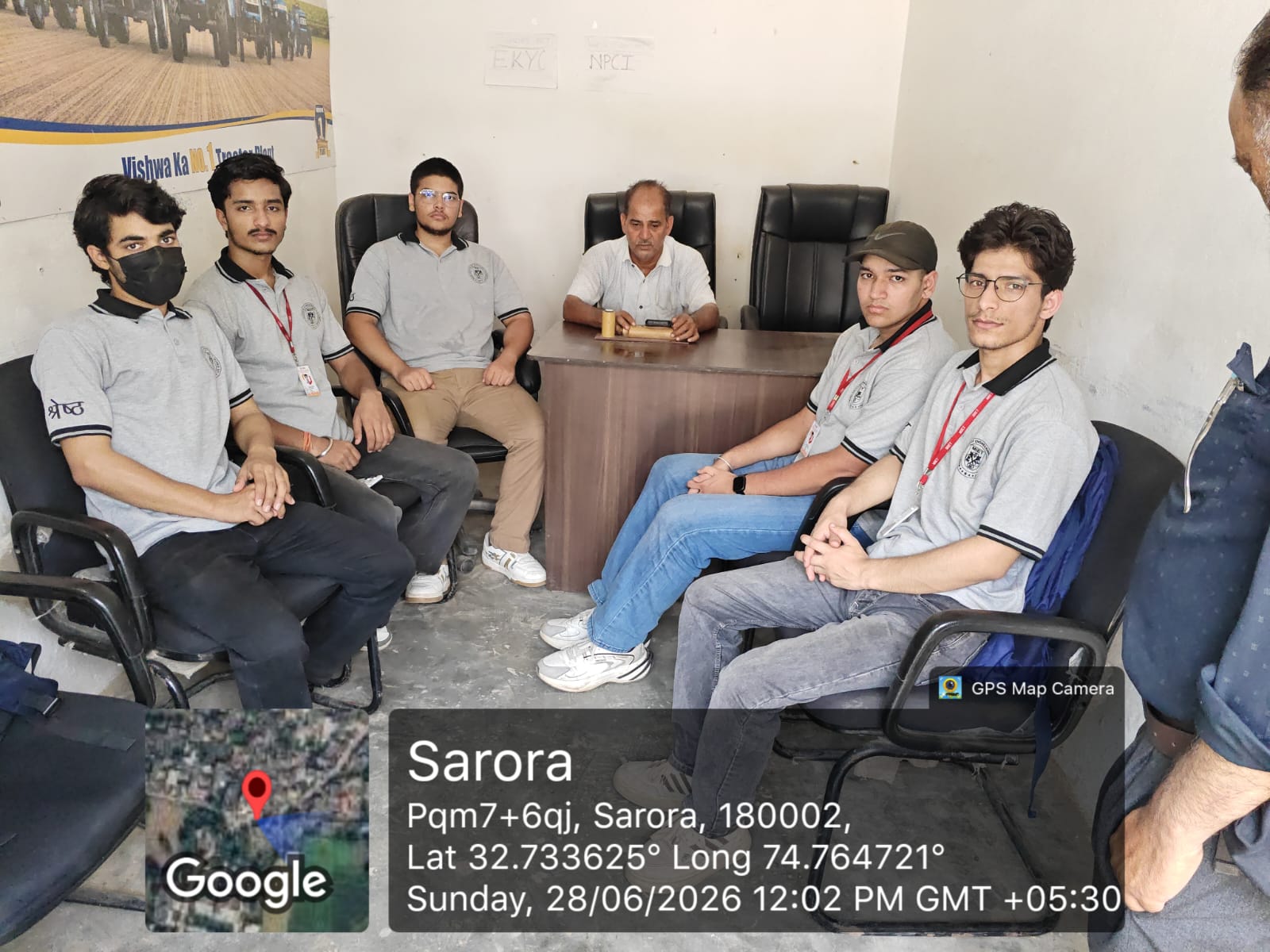
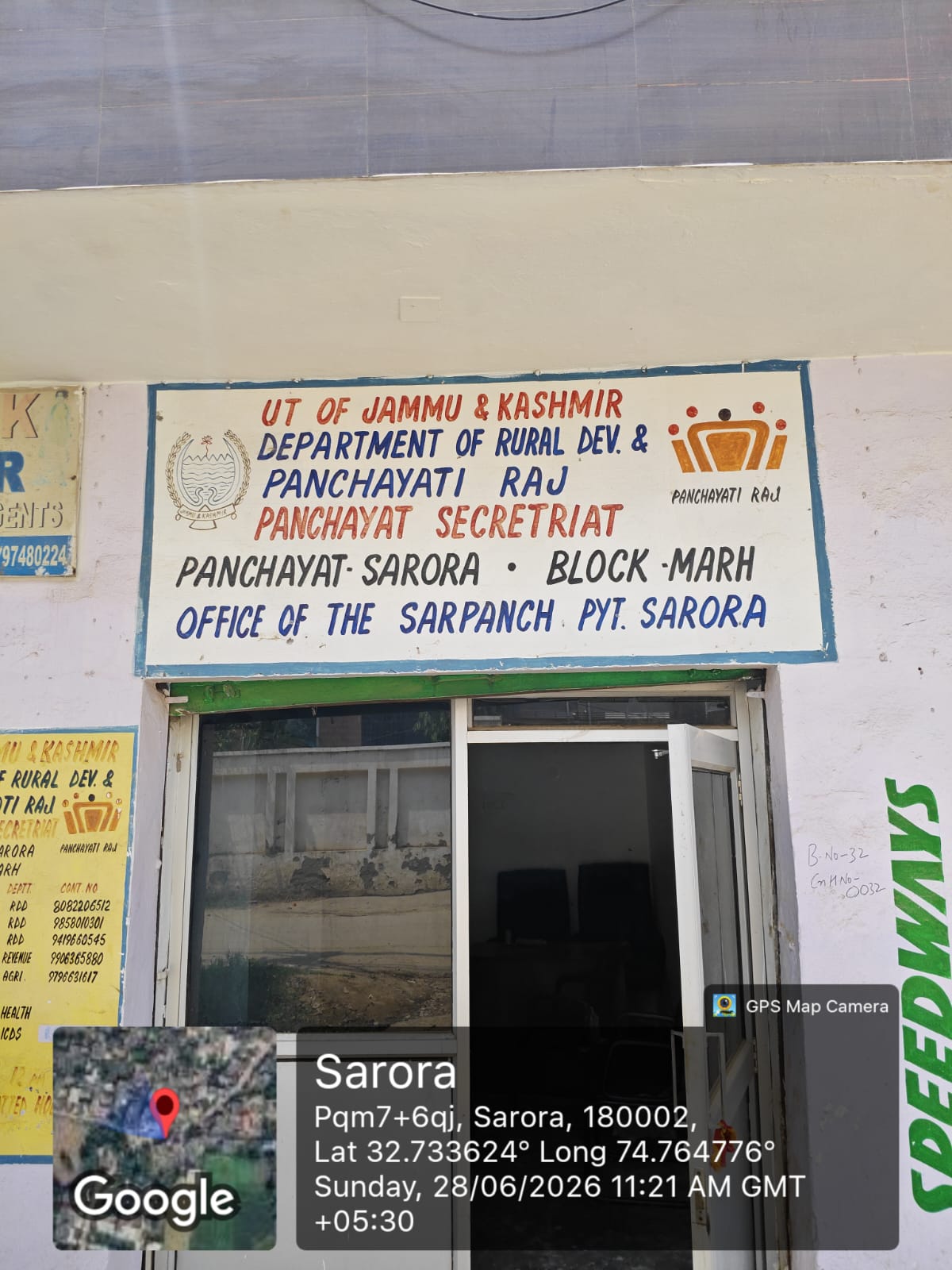
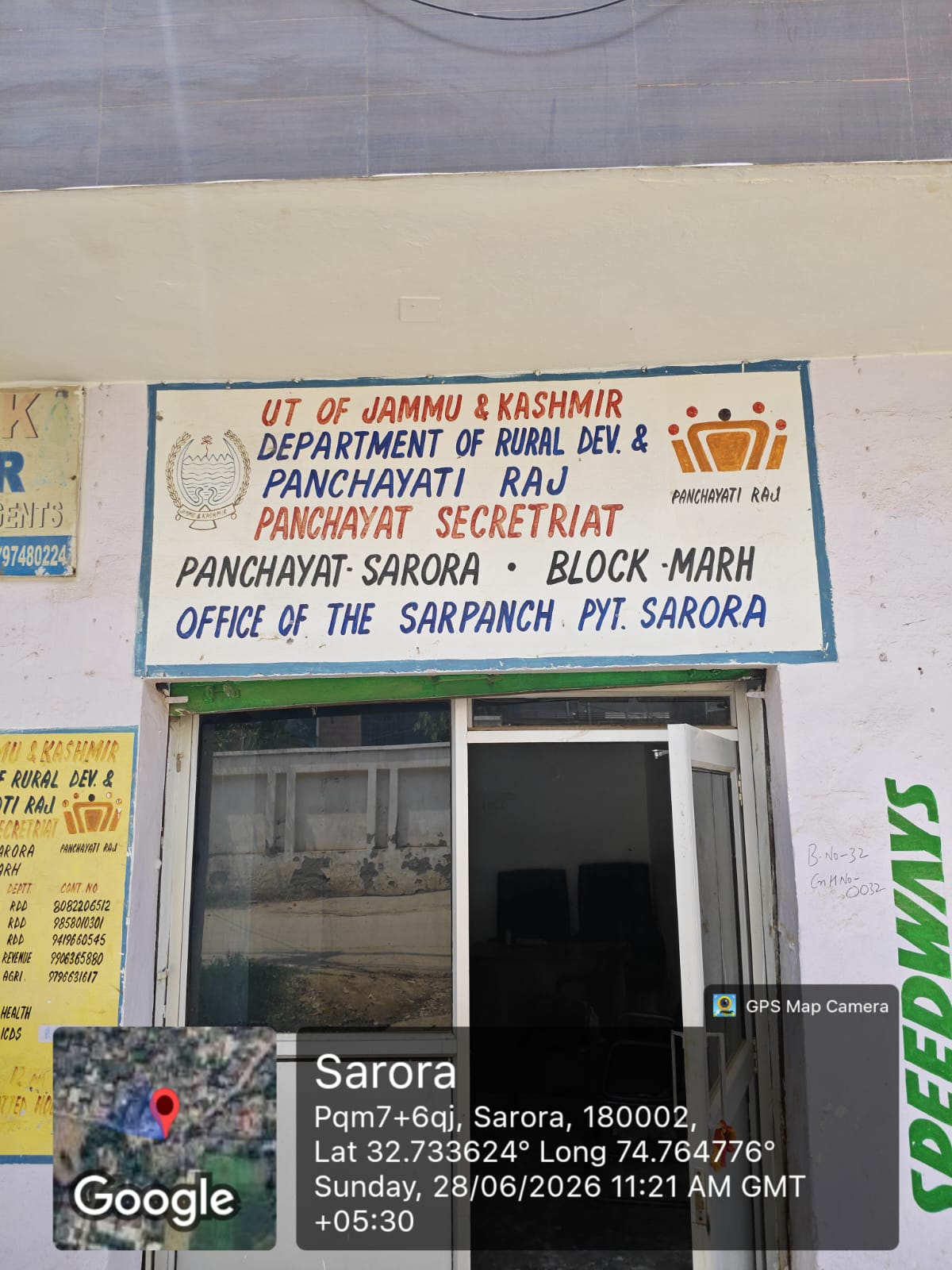
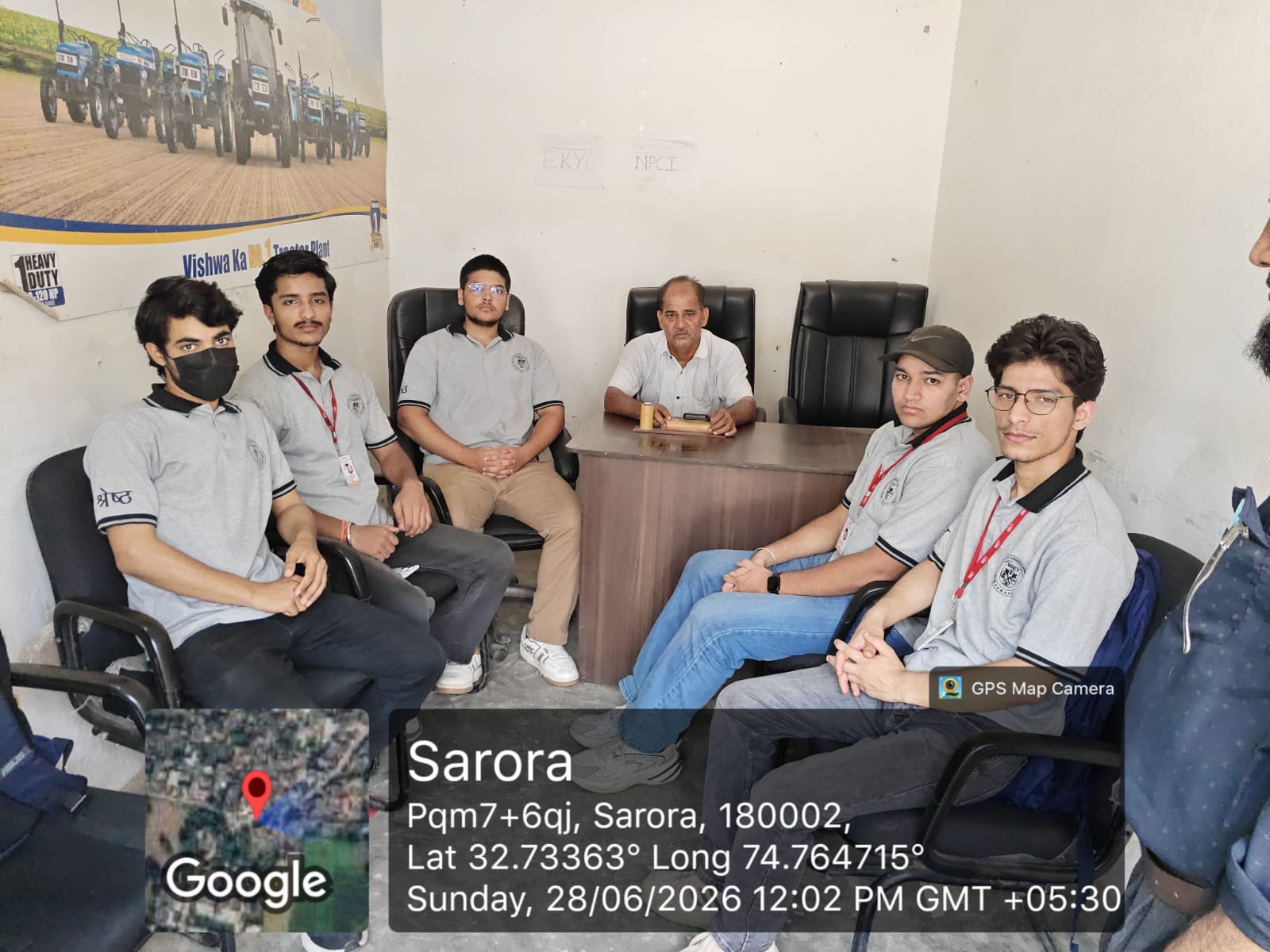
Sarora functions as an independent Gram Panchayat responsible for the administration and development of the village. The Panchayat is headed by Mr. Ashok Kumar Saini, the elected Sarpanch, who oversees local governance, development works, and the implementation of government welfare schemes. The Panchayat also includes eight elected ward members, ensuring democratic representation from different parts of the village. Administrative responsibilities are supported by the Panchayat Secretary, Mr. Nandan Sharma, who manages official records and coordinates government programmes. The Panchayat office is located at Block Marh, Panchayat Sarora, Jammu.
Population and Demographic Profile
According to the 2011 Census of India, Sarora has a total population of 1,416, including 743 males and 673 females, residing in approximately 329 households. The village has a literacy rate of 72.95%, indicating steady educational progress among its residents. Children in the age group of 0–6 years number 154, accounting for nearly 11% of the total population. The Scheduled Caste population comprises 358 people, while no Scheduled Tribe population has been recorded. Based on historical growth patterns, the estimated population of Sarora is expected to reach approximately 1,727 by 2026.
Religious Importance and Spiritual Heritage
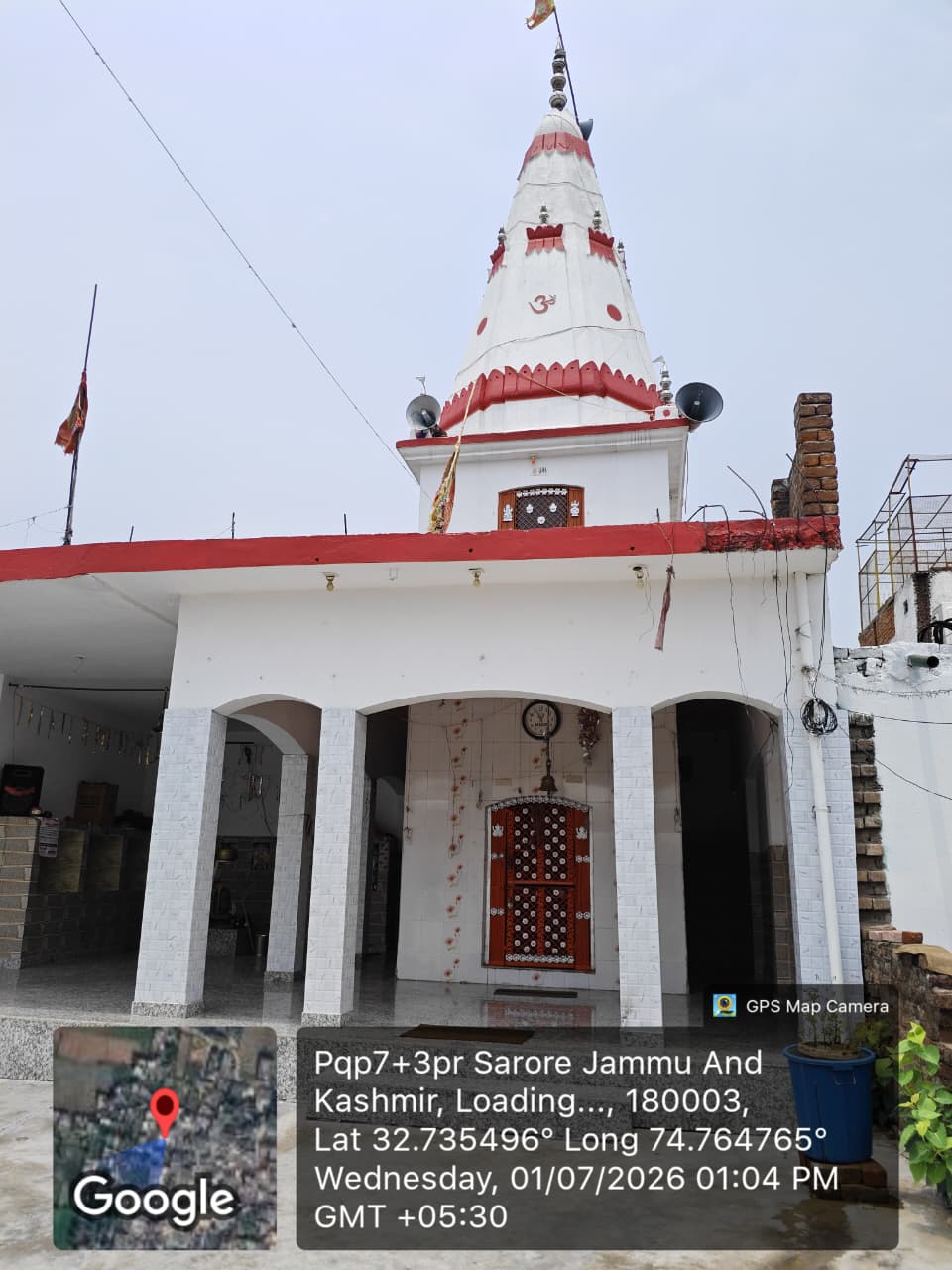
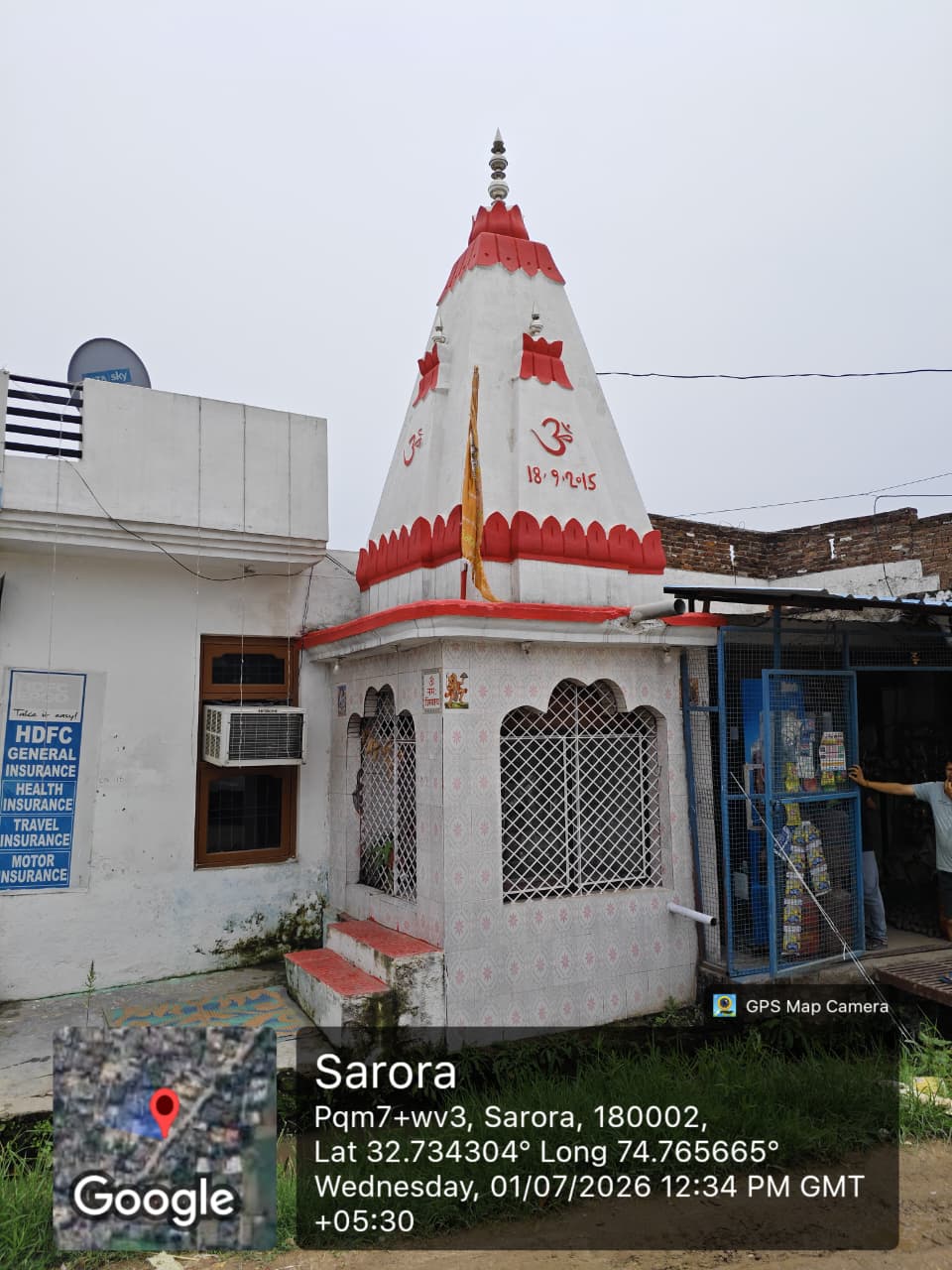
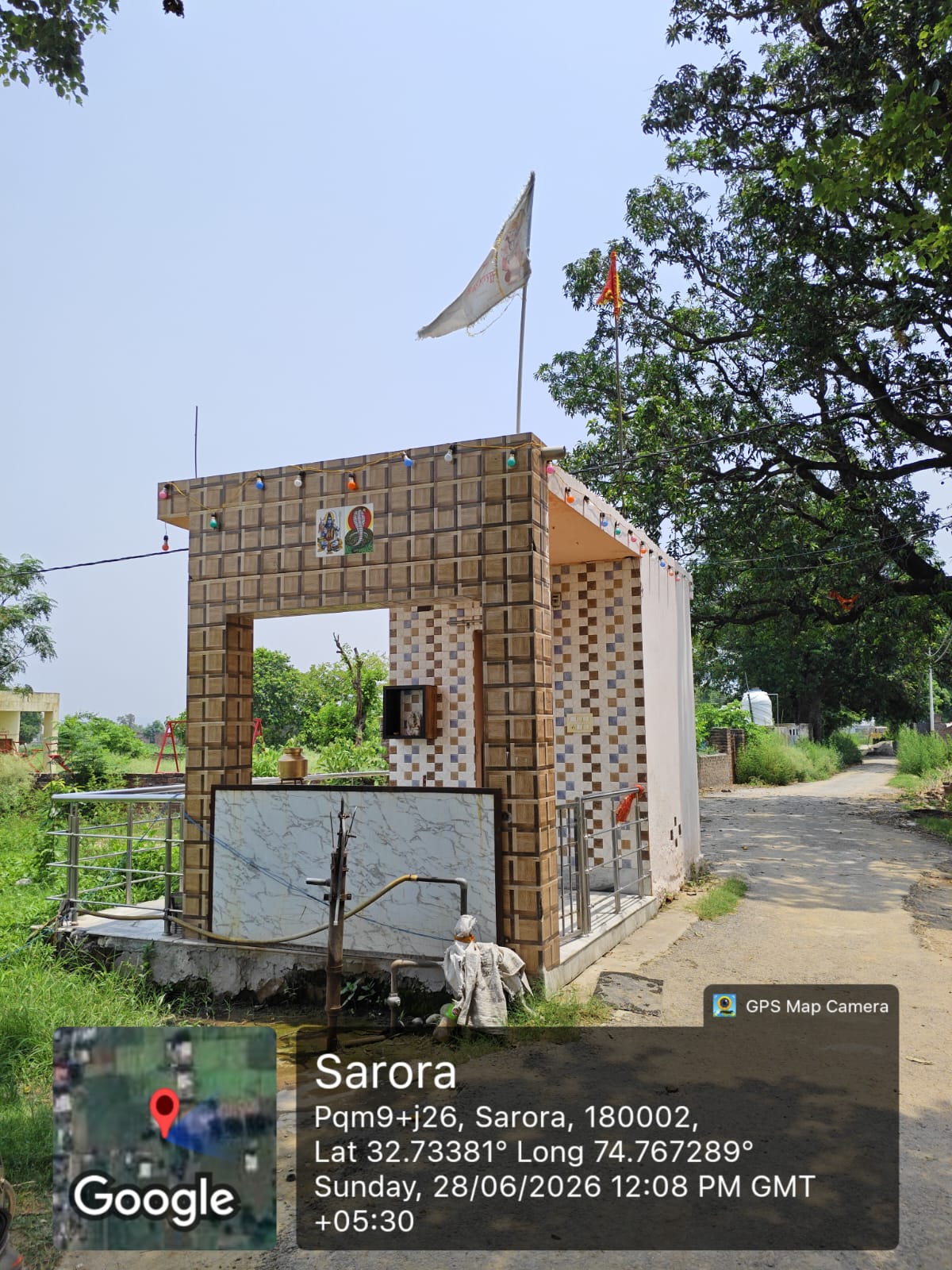
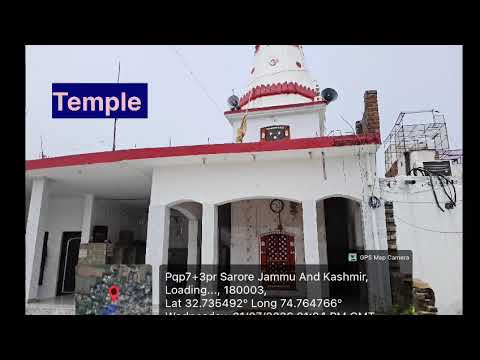
Religion occupies an important place in the lives of Sarora's residents. The village is particularly famous for its ancient temple dedicated to Lord Shiva, which attracts devotees from nearby villages and surrounding areas throughout the year. Besides the worship of Lord Shiva, the villagers possess deep faith in Lord Krishna, whom they regard as the guardian deity of the village. Local beliefs hold that sincere prayers to Lord Krishna bring prosperity, happiness, and protection from difficulties. Religious festivals, temple celebrations, and devotional gatherings continue to strengthen the spiritual unity of the community.
Cultural Heritage and Traditions
Sarora preserves the rich cultural traditions of the Dogra region. Dogri serves as the primary language spoken by the local population, reflecting the village's cultural identity. Traditional attire includes the sari for women, while bangles remain one of the most popular ornaments worn during festivals and family functions. The local cuisine is simple yet wholesome, with roti and dal forming the staple diet of most households. Community festivals, marriages, and religious ceremonies continue to uphold customs that have been passed down through generations.
Economy and Sources of Livelihood
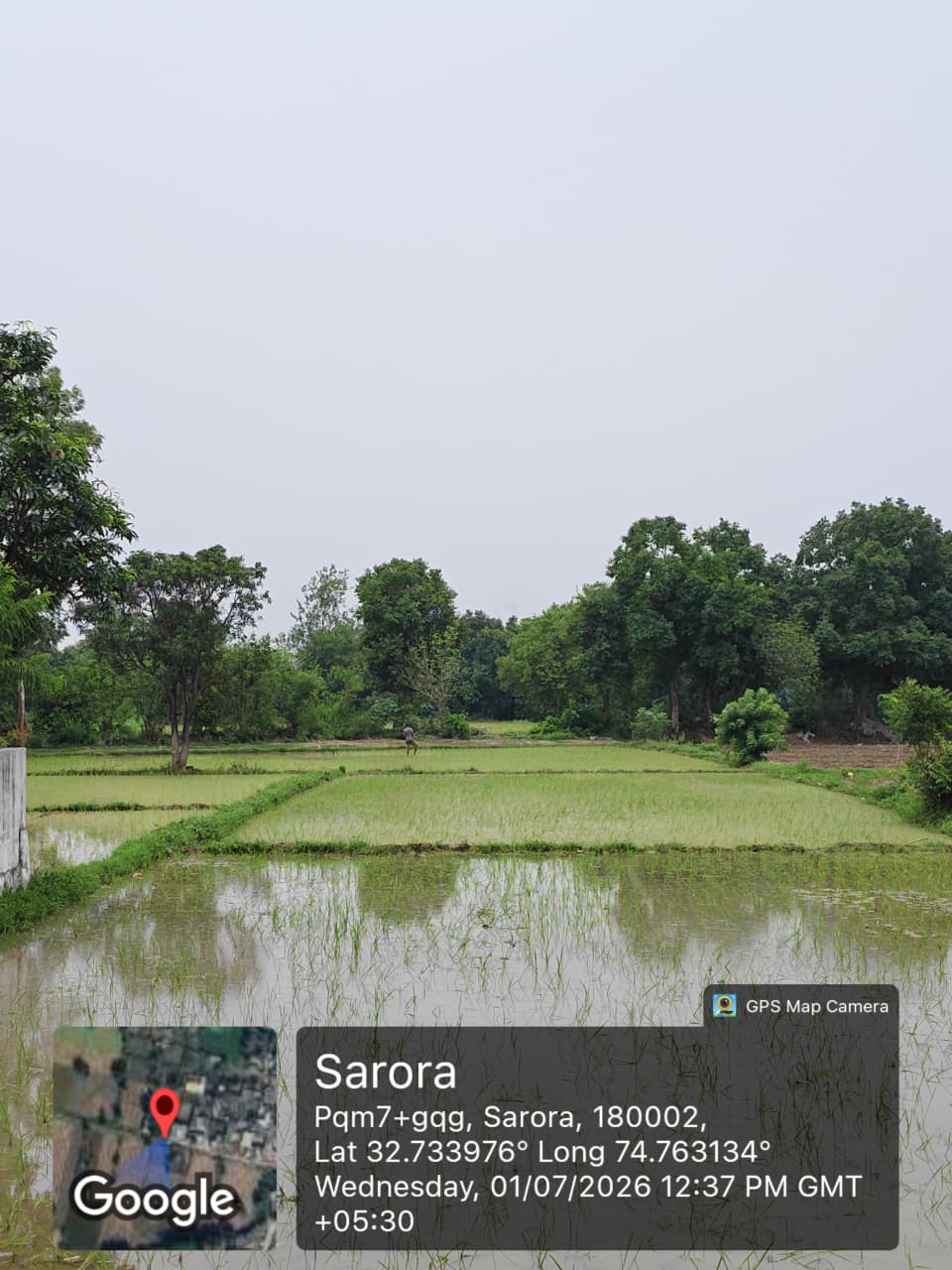
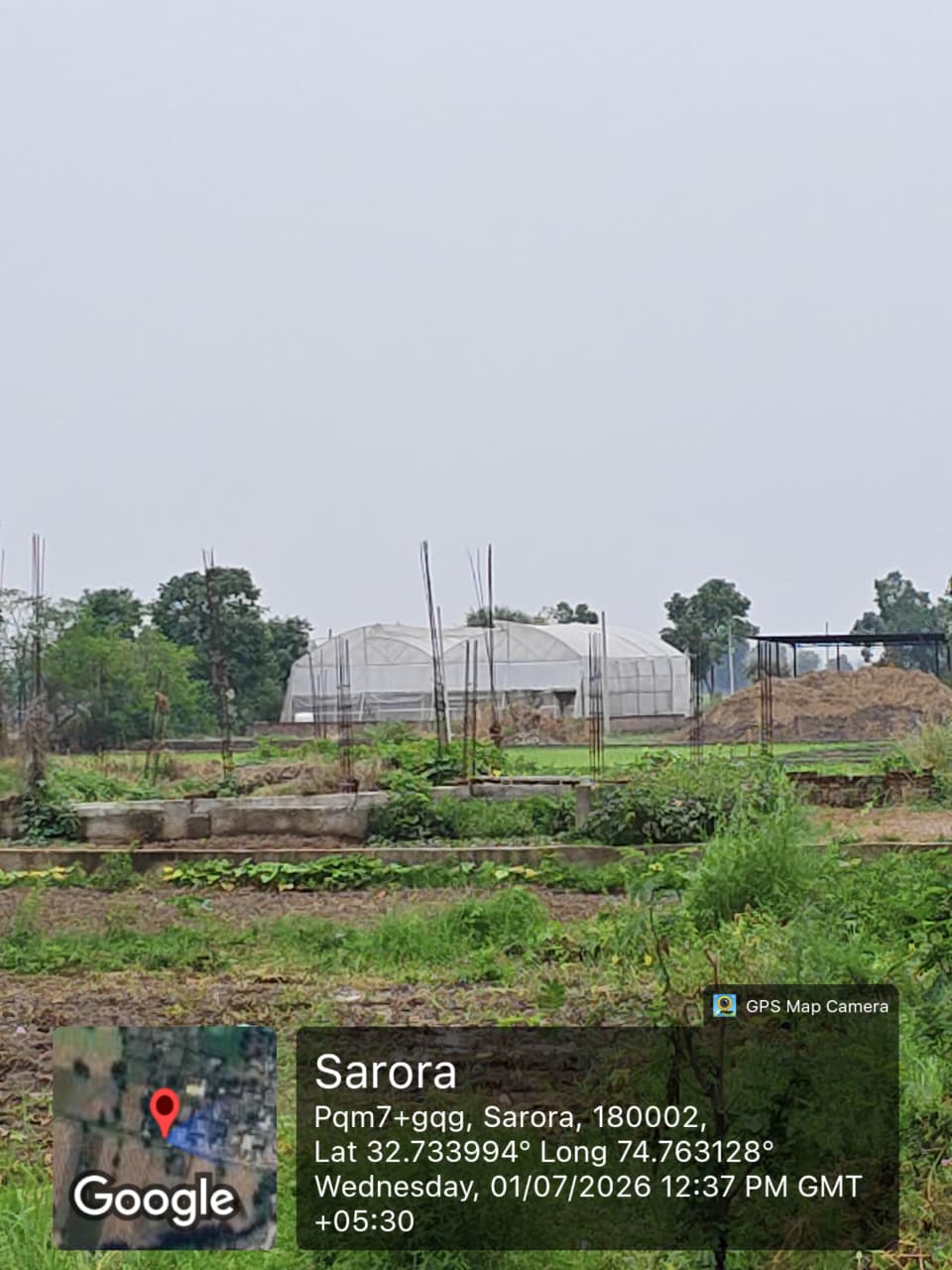
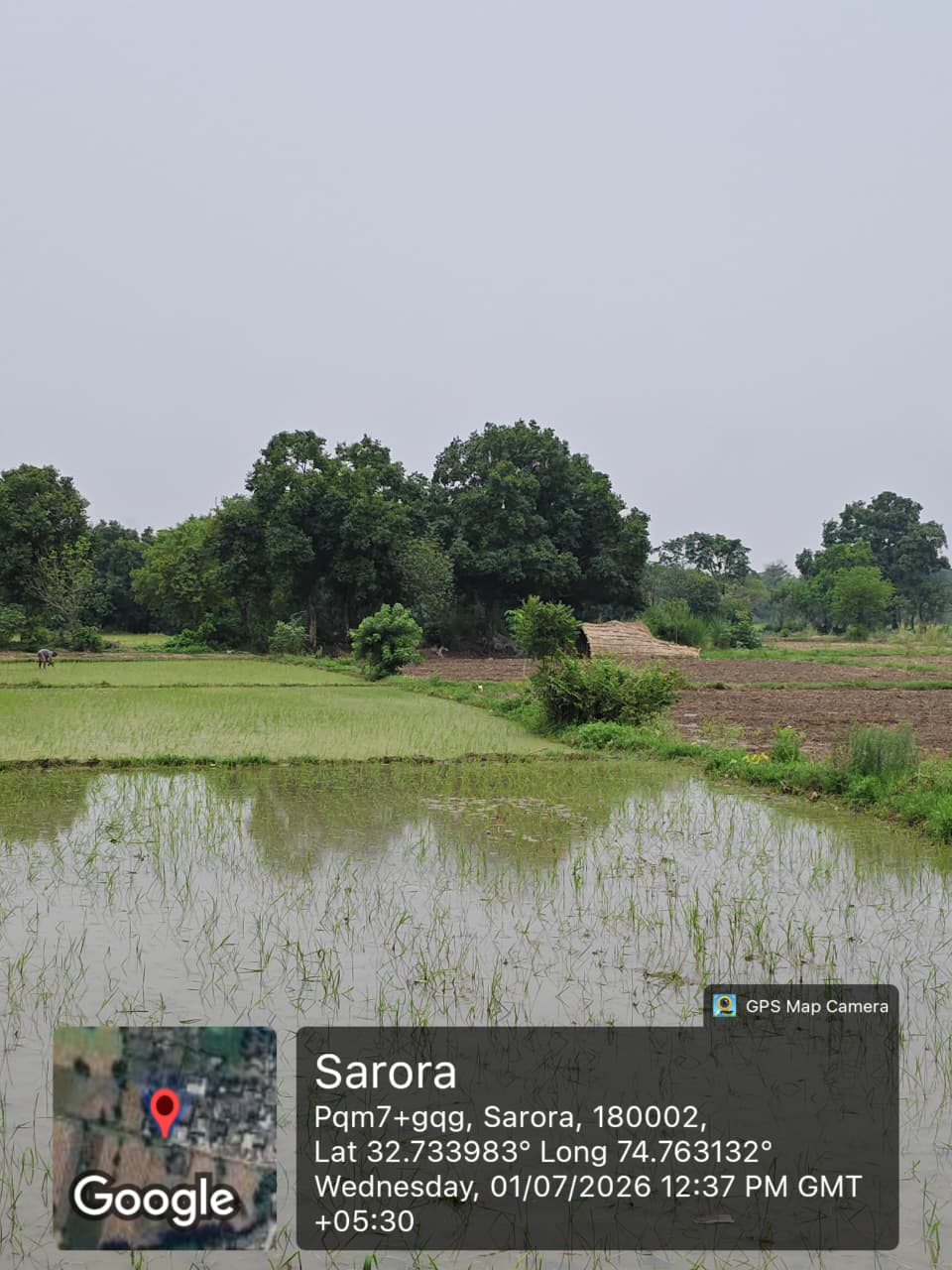
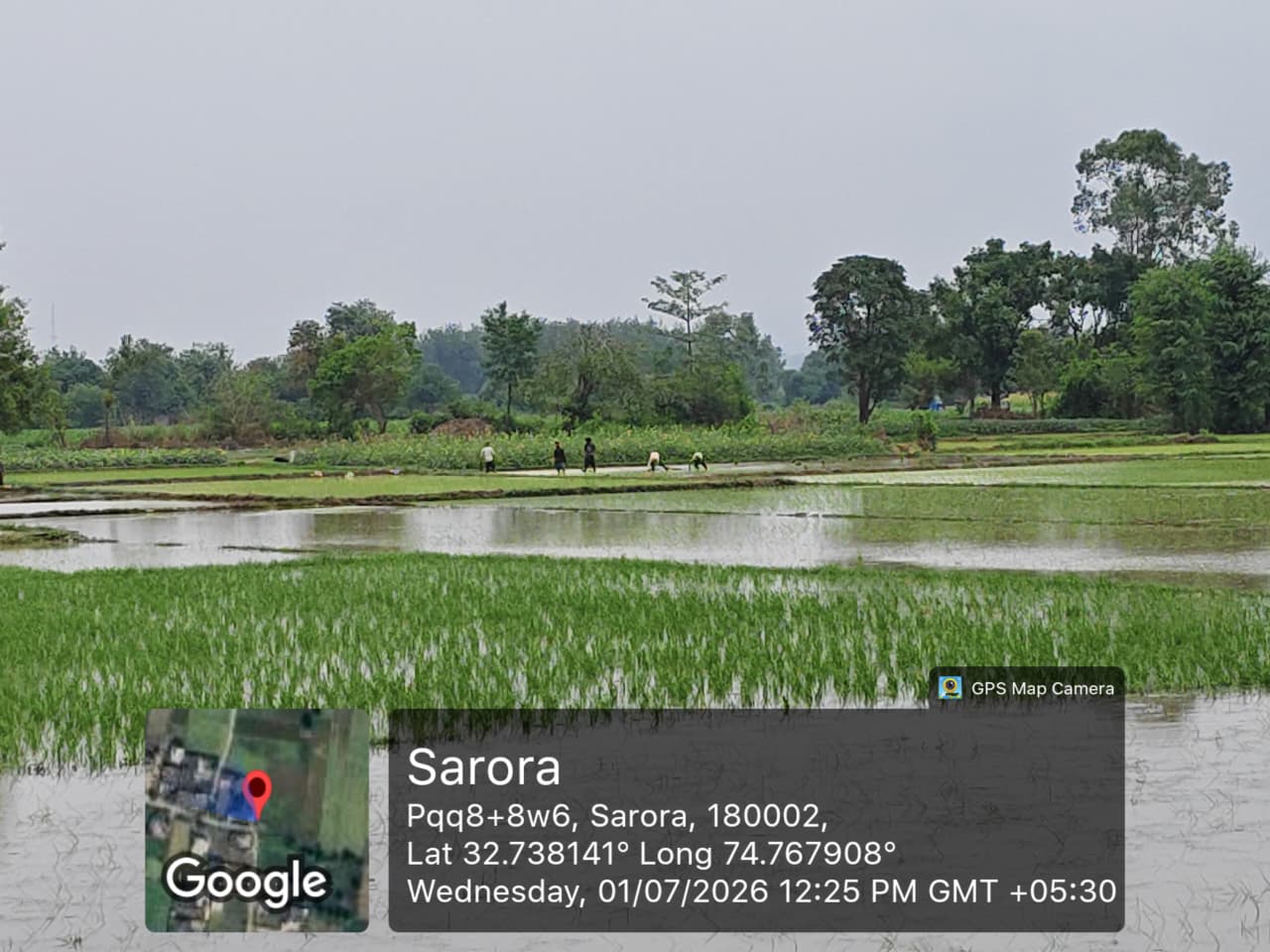
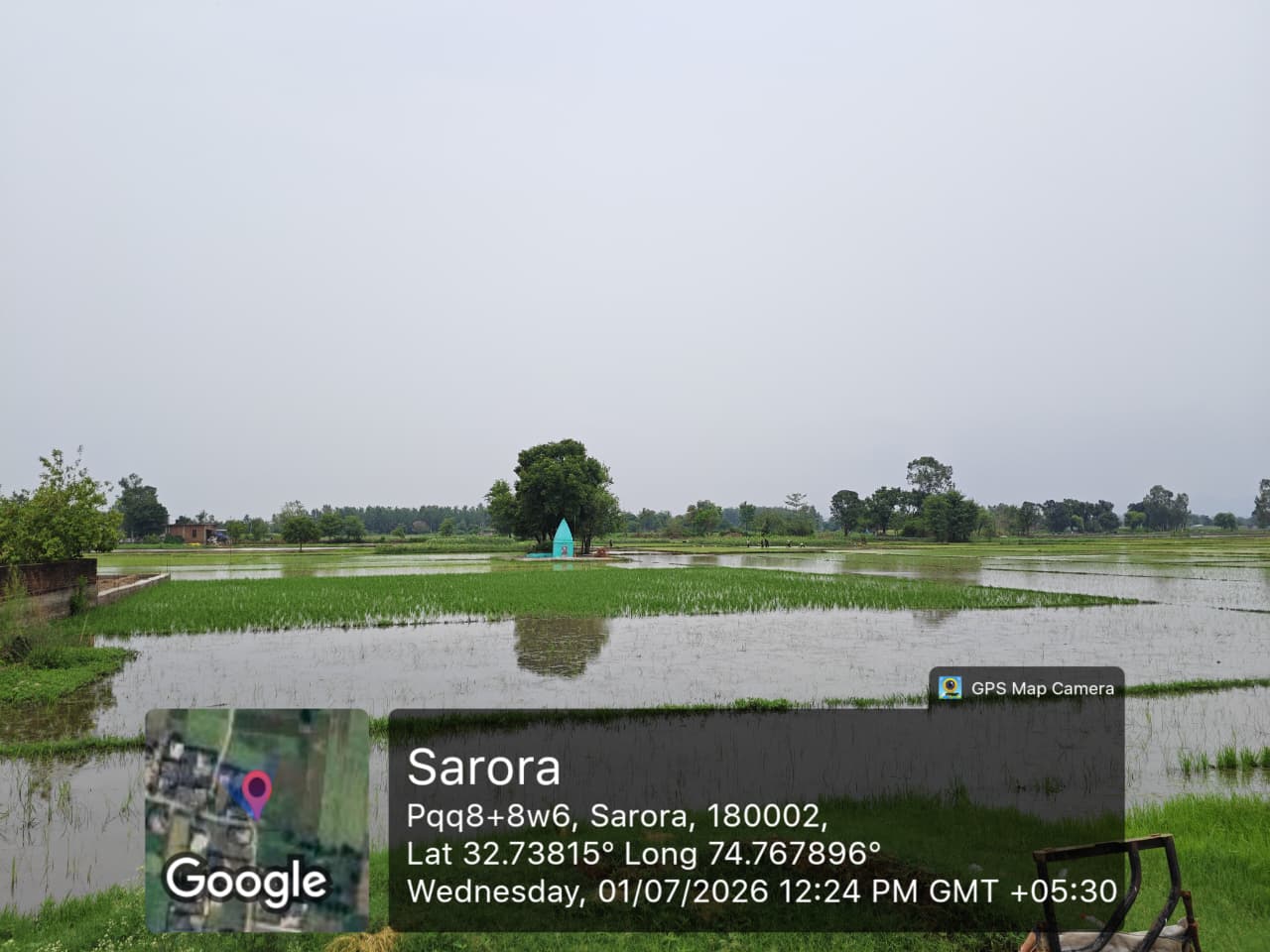
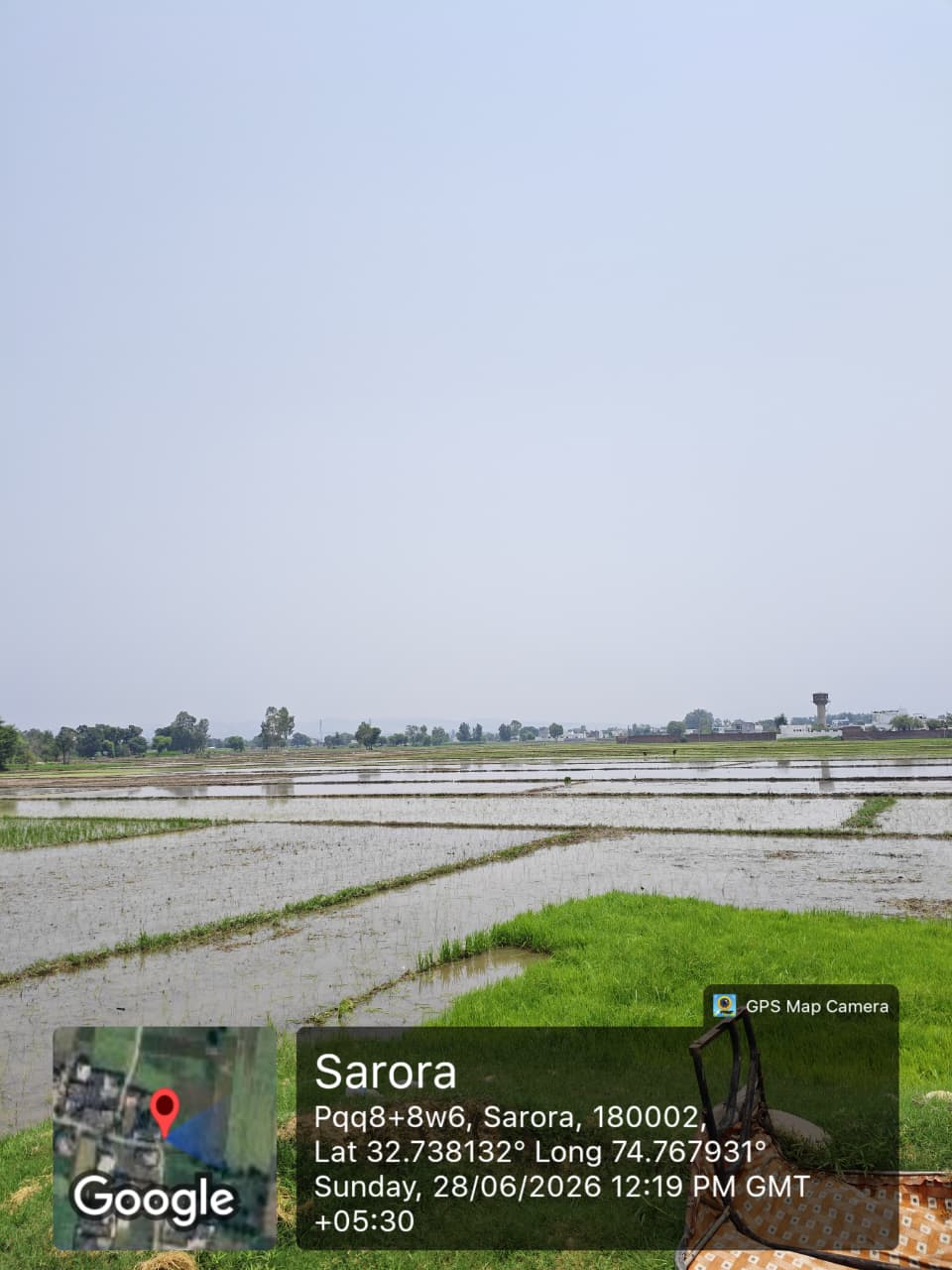
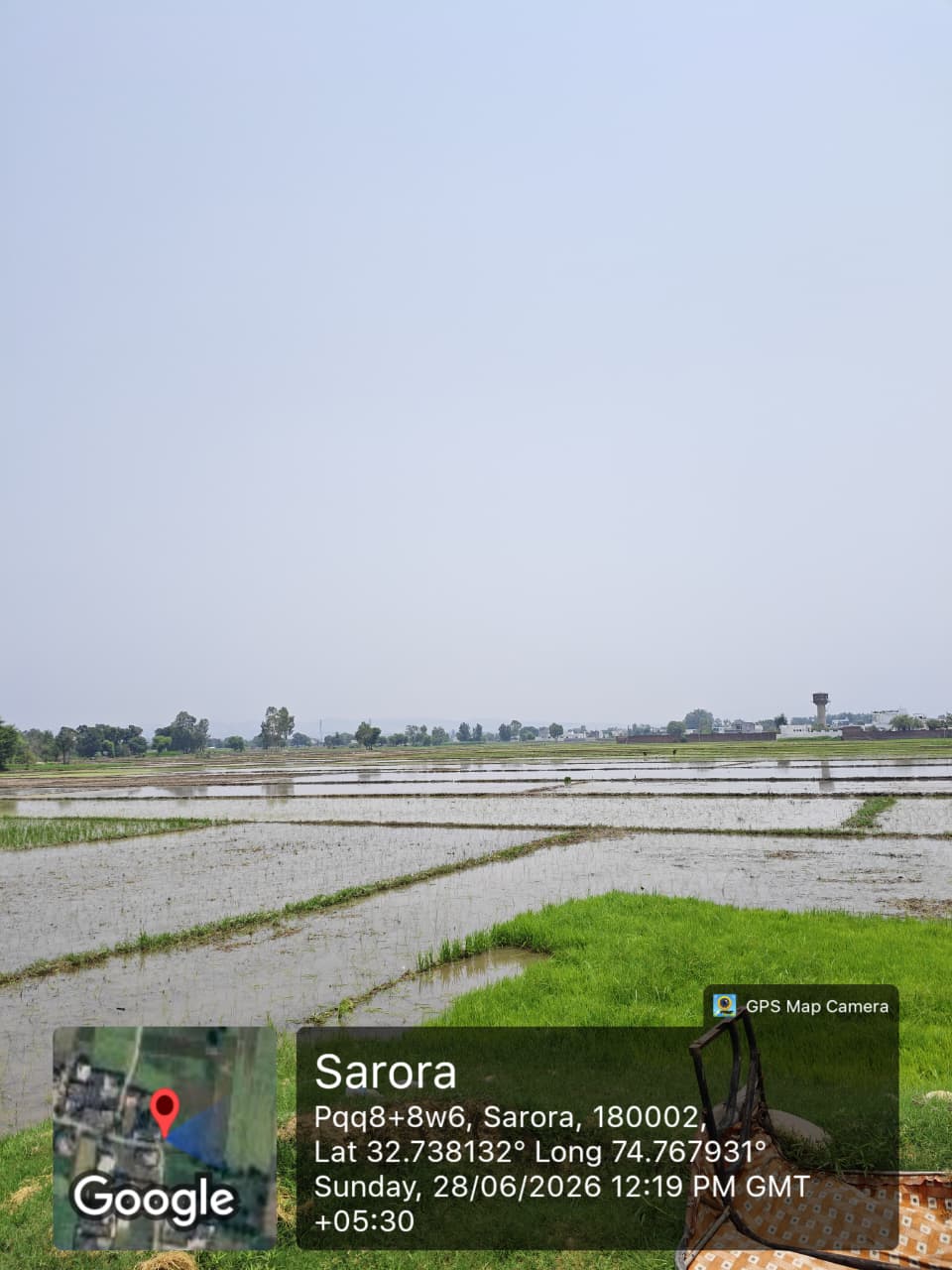
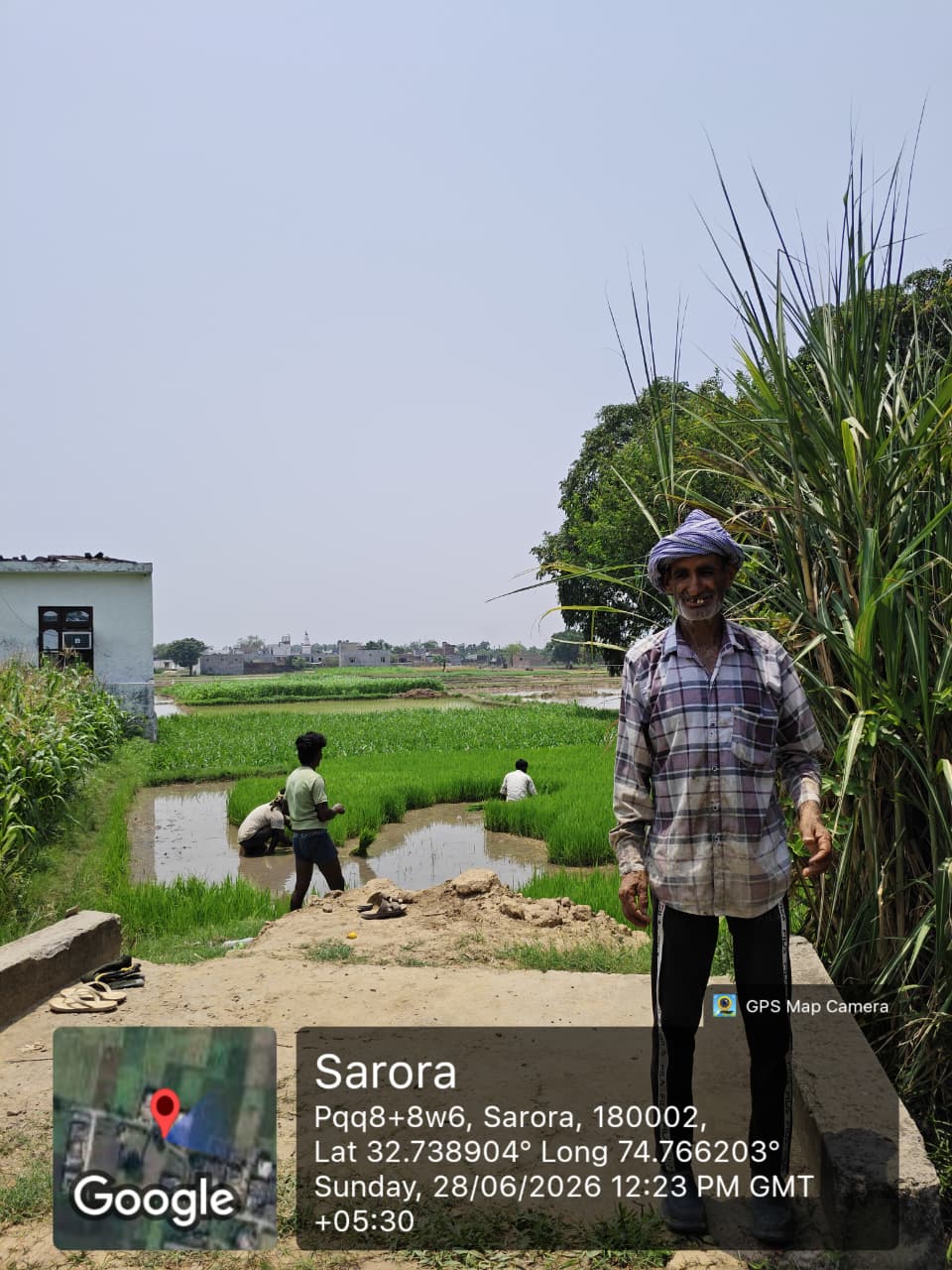
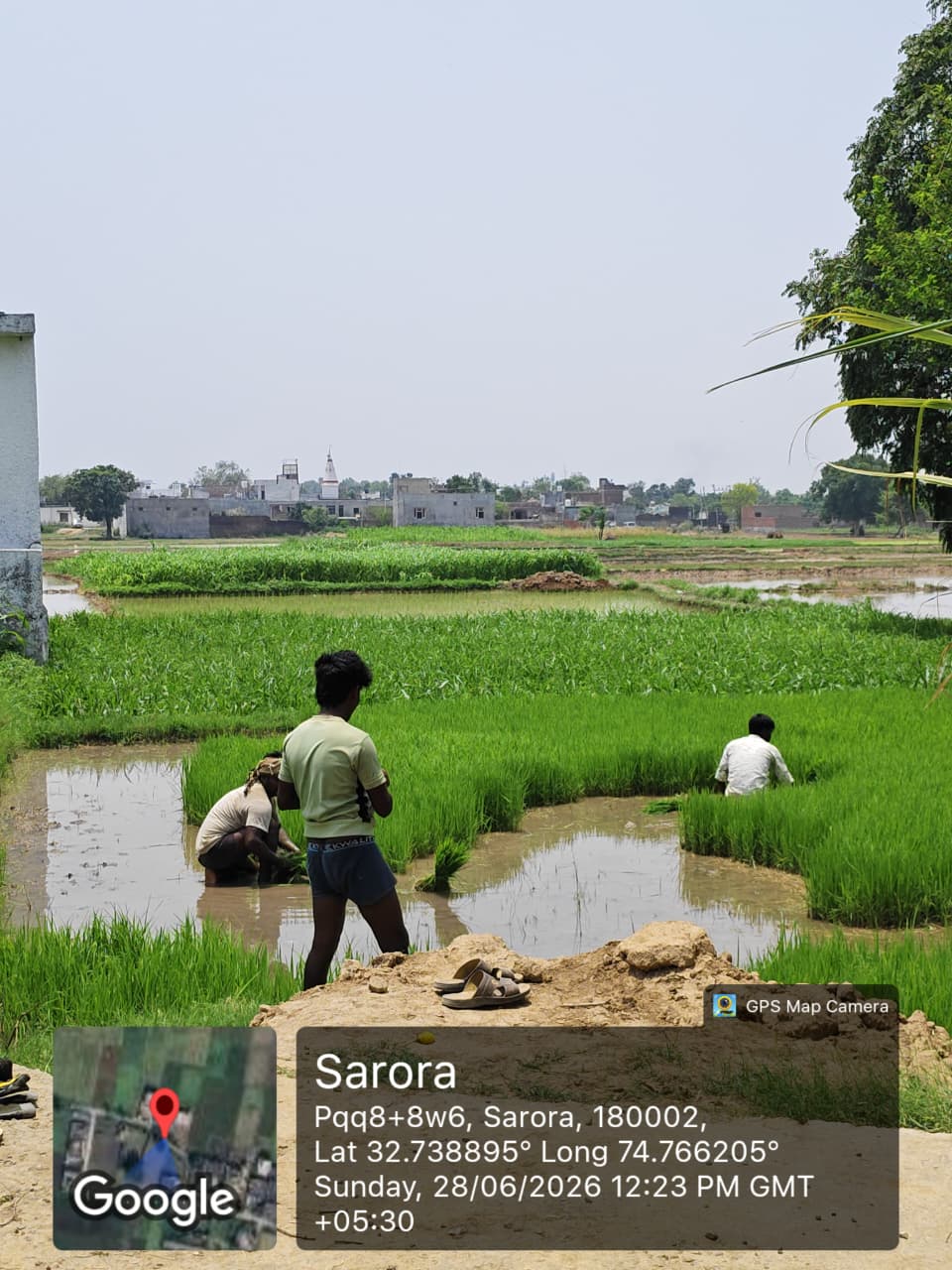
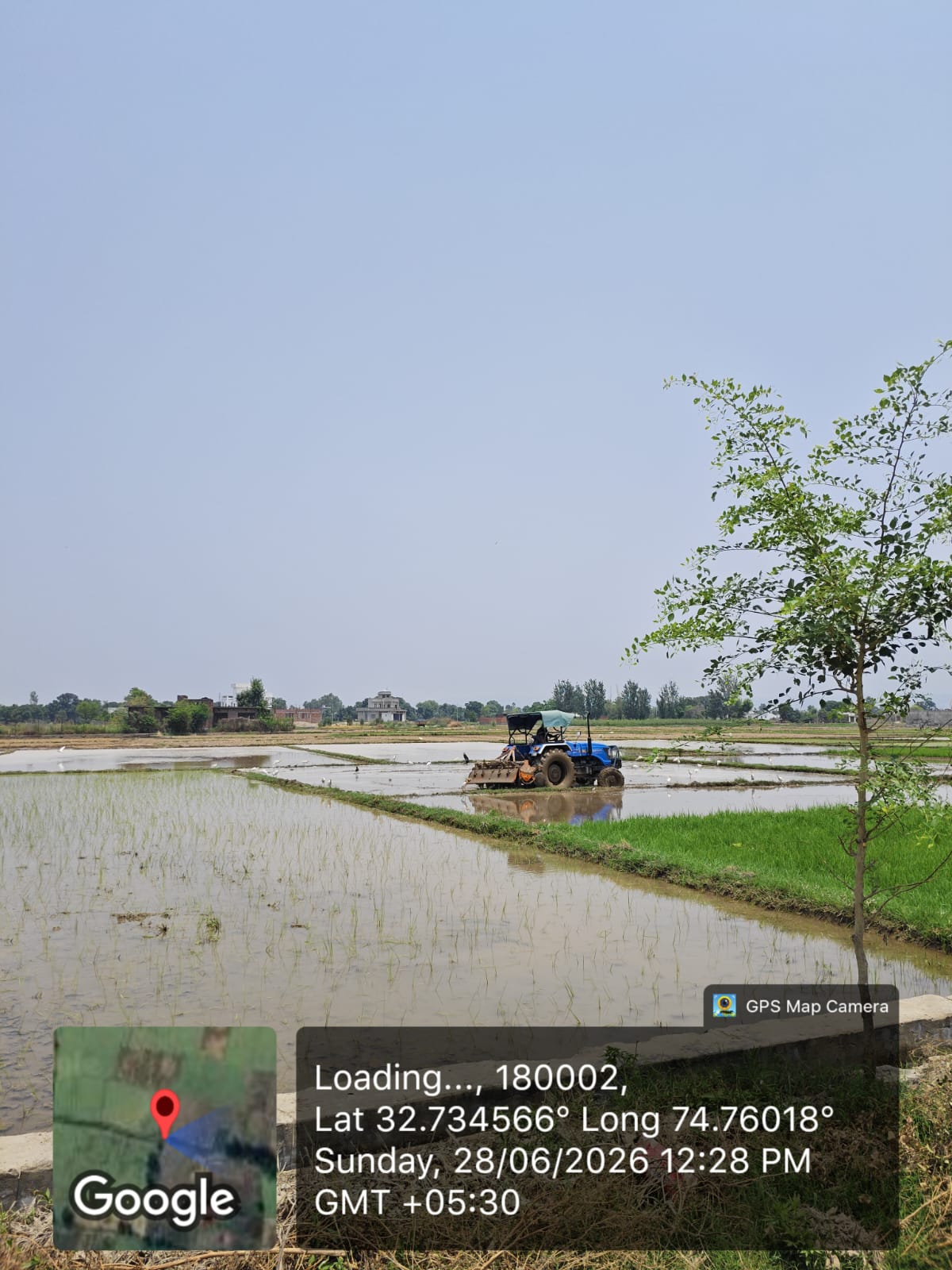
Agriculture forms the backbone of Sarora's economy, with a majority of families depending on farming as their primary occupation. The fertile agricultural land supports the cultivation of rice, which is the principal crop grown in the village. Dairy farming also contributes significantly to the local economy by providing supplementary income to farming households. The village's forest surroundings further enrich the natural environment and support agricultural activities through favourable ecological conditions.
Infrastructure and Basic Amenities
Sarora has witnessed considerable infrastructural development over the past few decades. Electricity was introduced in 1988, greatly improving living conditions. Drinking water facilities and telephone services became available in 1998, while cooking gas connections were introduced in 2004. Household sanitation improved significantly with the construction of toilets in 2009, and internet connectivity reached the village in 2012, enabling digital communication and access to online services. The village also benefits from a proper drainage system, contributing to improved public hygiene.
Education and Literacy
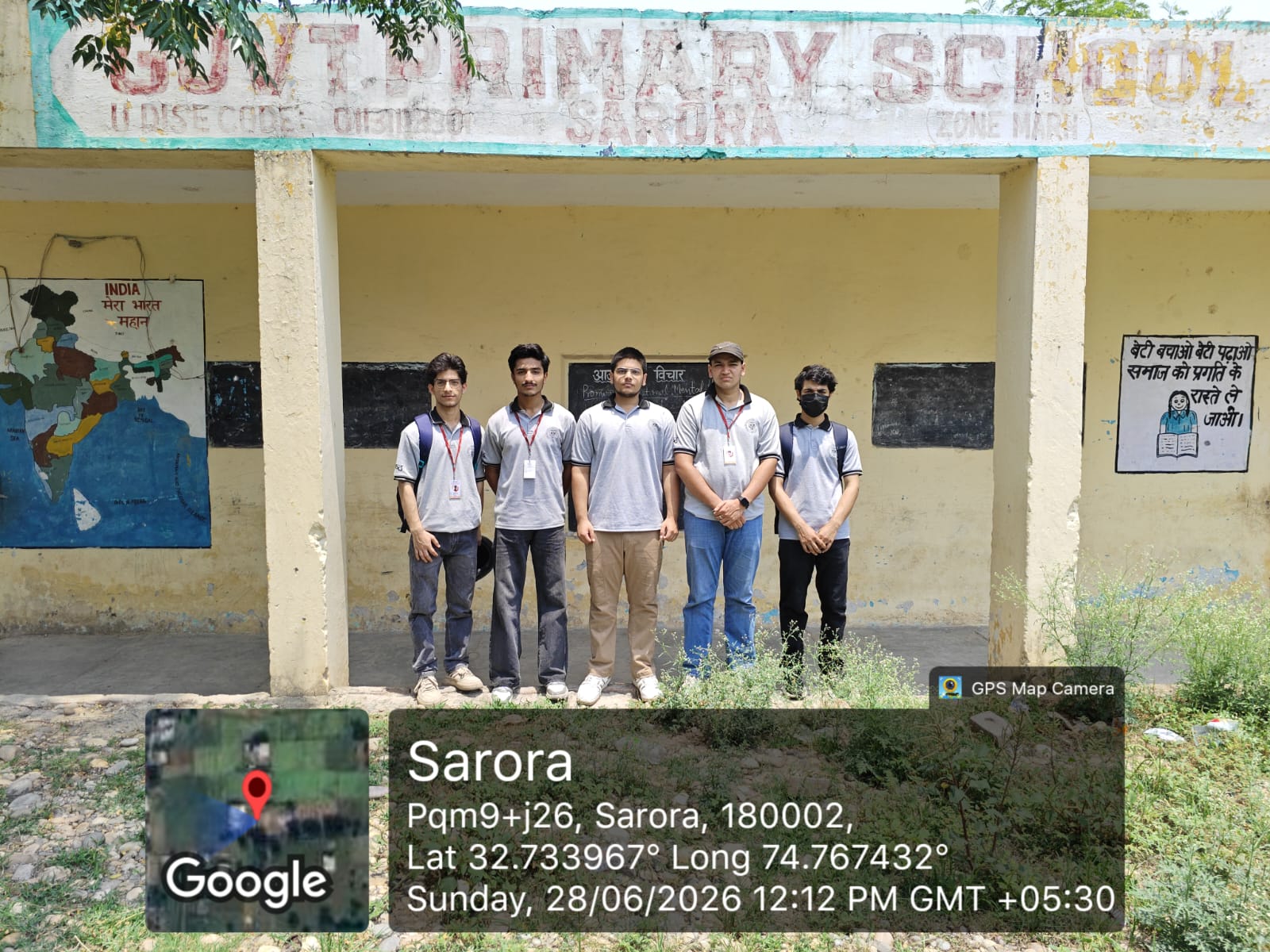
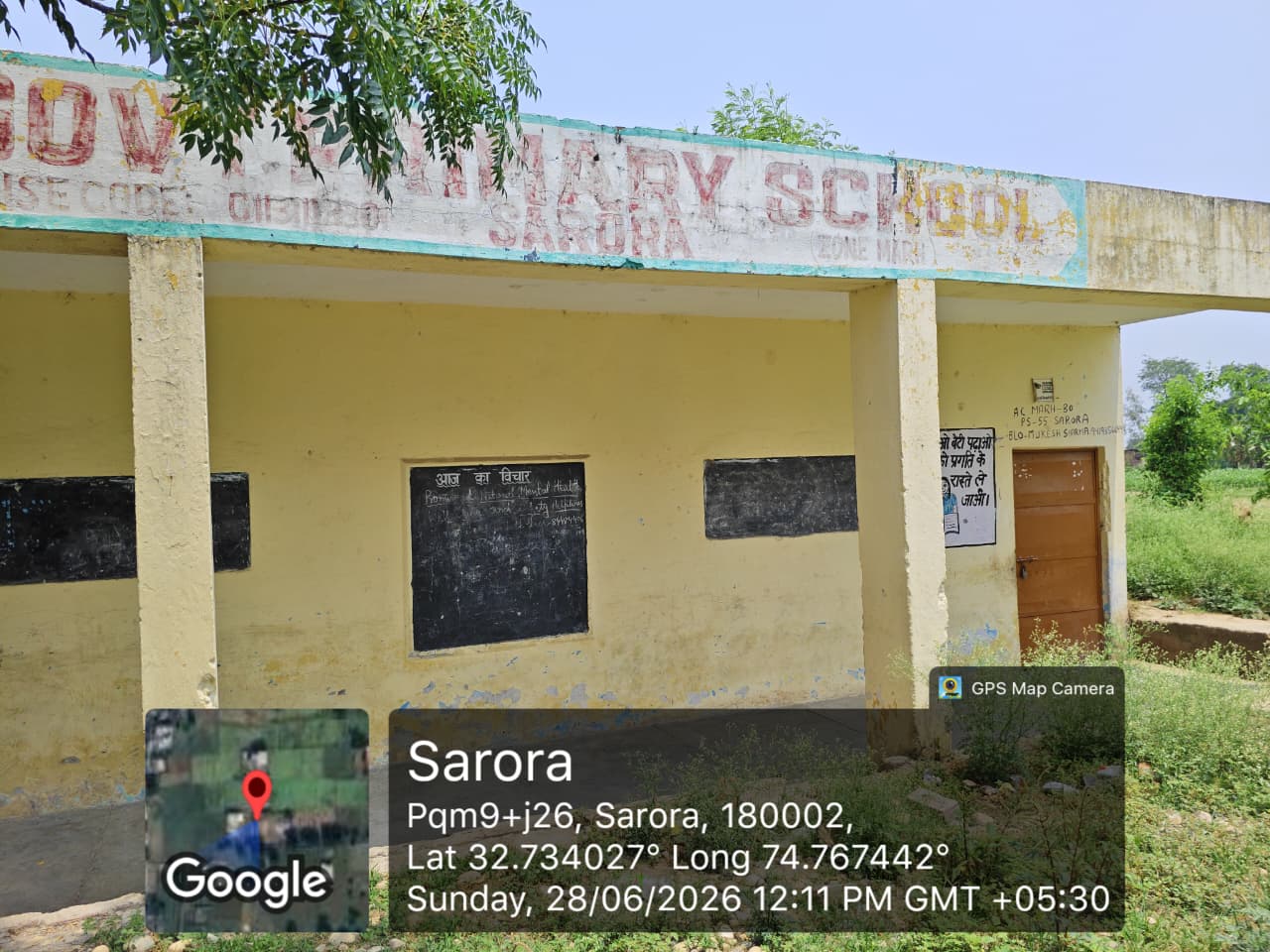
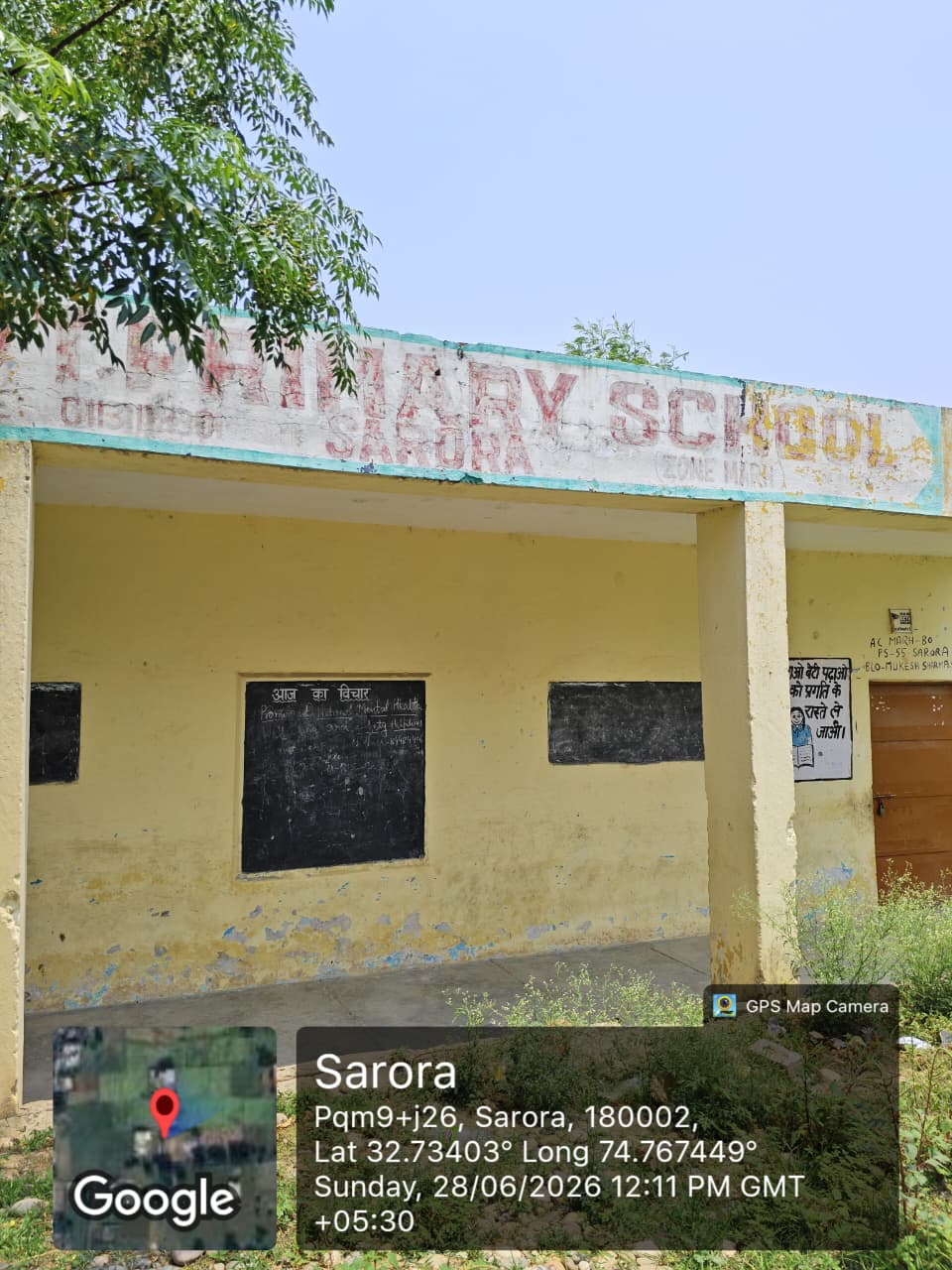
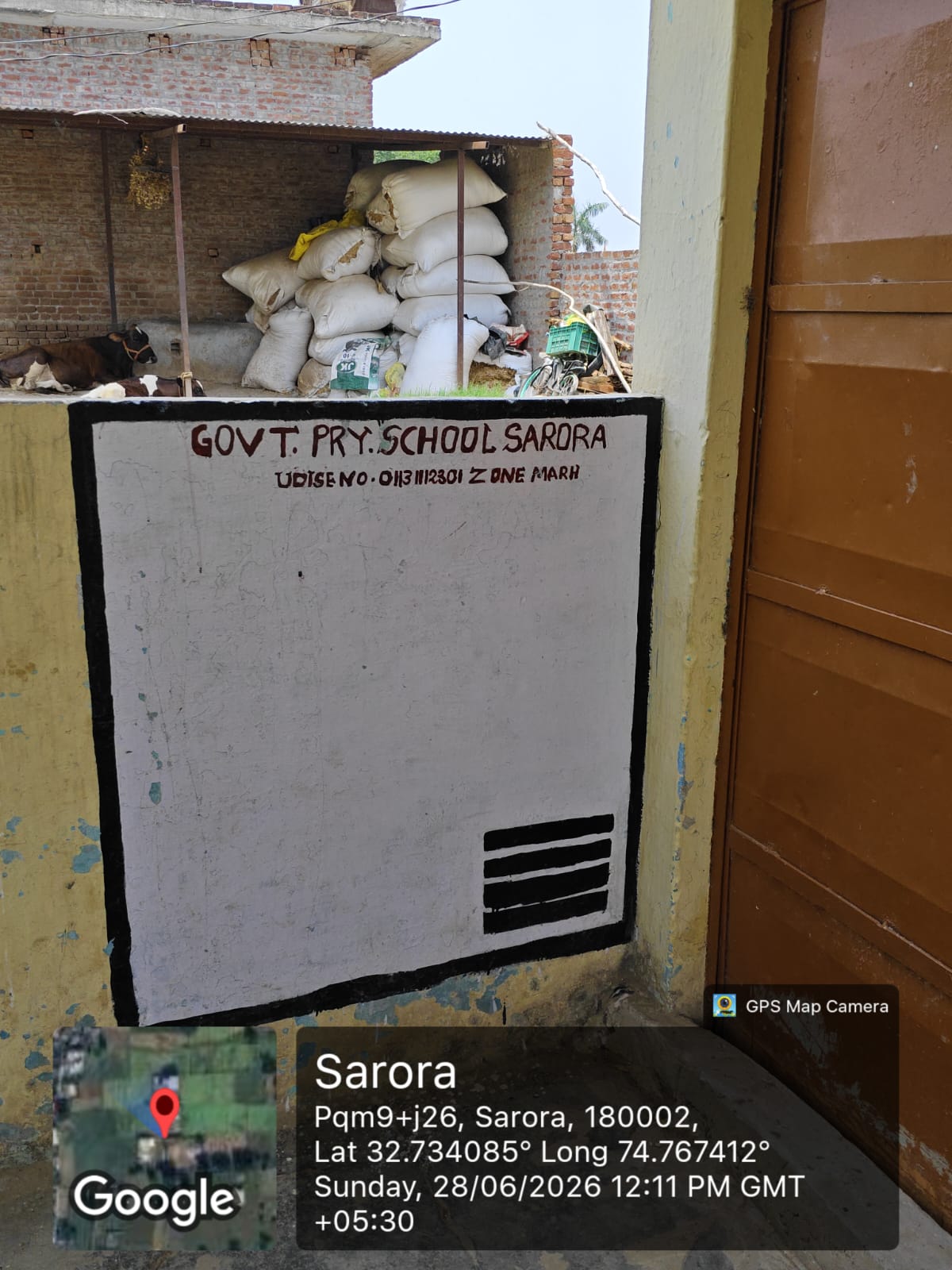
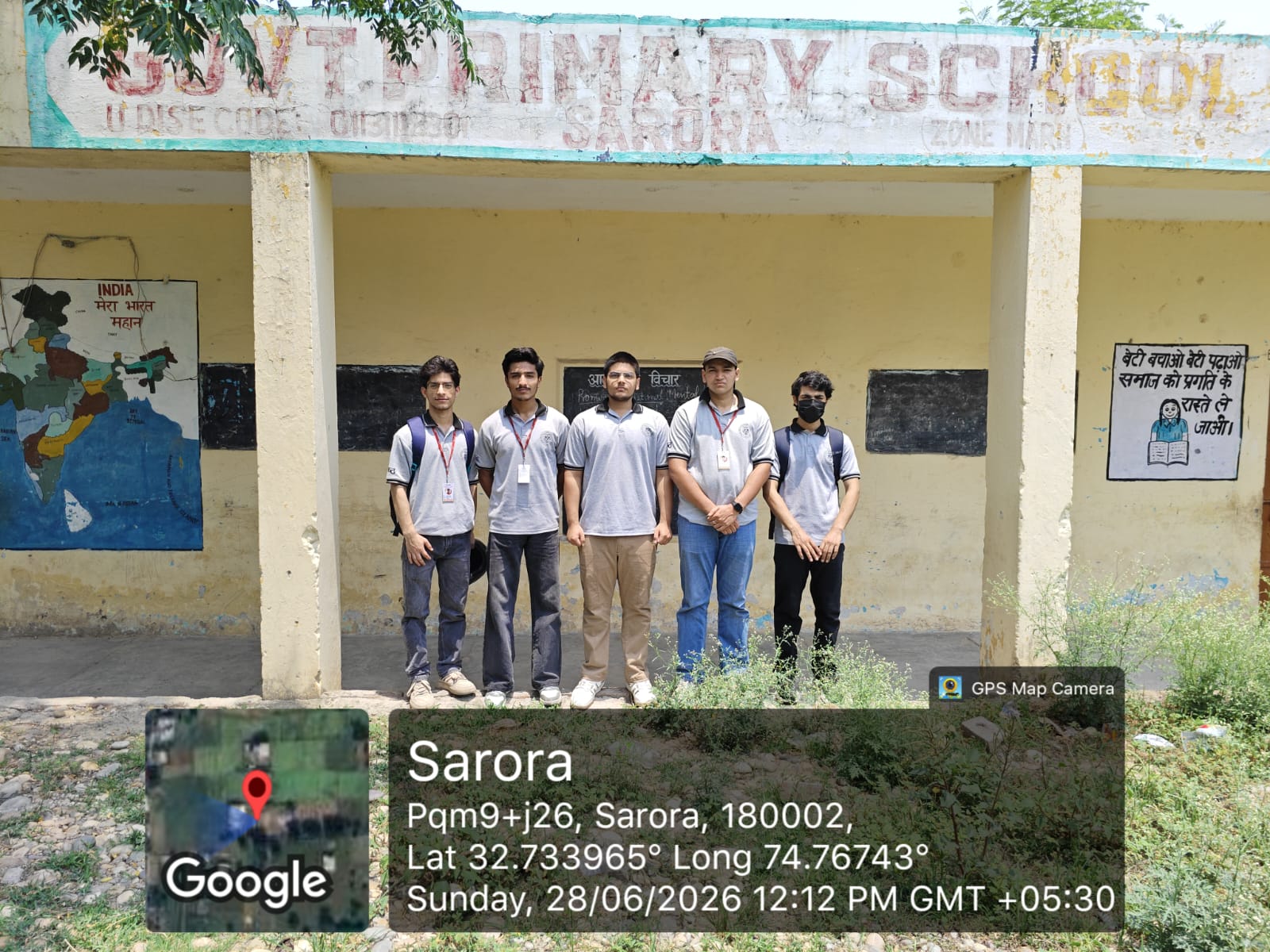
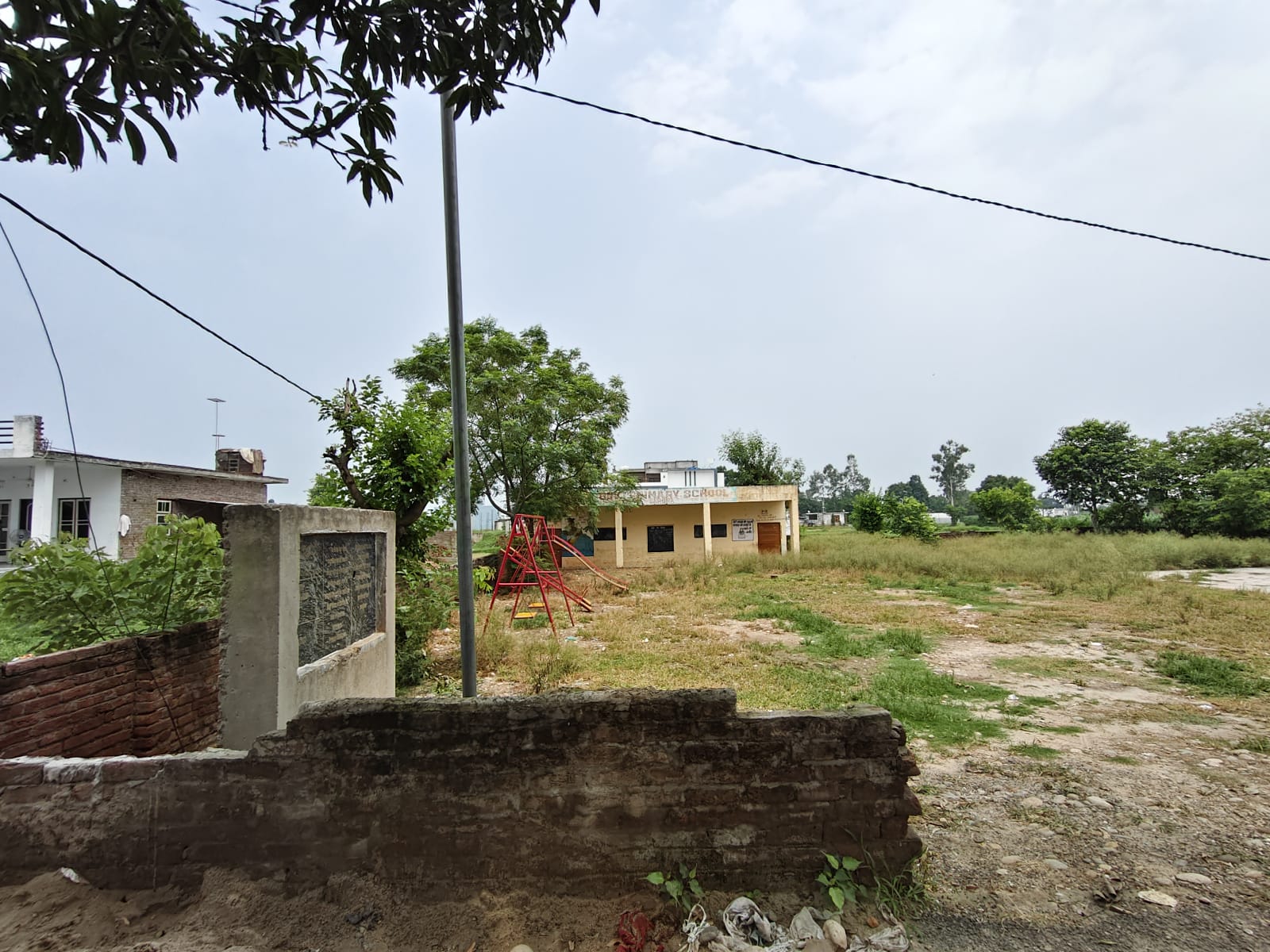
Education has played an important role in the development of Sarora. The village's first educational institution was established in 1988, and today it has one government-managed co-educational primary school functioning under the Department of Education. The school provides quality primary education to village children, contributing to the village's literacy rate of nearly 73 percent. Students seeking secondary and higher education generally travel to nearby educational institutions in Jammu and surrounding areas.
Transportation and Connectivity
Sarora enjoys excellent connectivity through an all-weather road network. Public transportation is readily available through buses and shared auto-rickshaws operating within the village and nearby areas. The nearest bus stop is located at Akalpur, just one kilometre away, while Jammu Railway Station serves as the nearest railhead. The village can be reached from Jammu city within approximately 15 to 30 minutes, making it easily accessible for residents, visitors, and pilgrims.
Banking and Communication Facilities
Postal services are available within the village through its local post office, ensuring convenient communication and postal delivery for residents. Although banking and ATM facilities are not available within Sarora itself, these services can be accessed in nearby towns situated approximately 5 to 10 kilometres away. The presence of internet connectivity has further improved communication and access to digital banking and government services.
Surrounding Villages
Sarora is surrounded by several neighbouring villages that contribute to the social and economic interactions of the region. These include Chak Durgo, Sangran Pur, Akalpur, Patnayal, Pachnandpur, Gangwan, Shahzadpur Bhupa Kanhaya, Shazadpur Marhatta, and Chak Chouhan. Regular movement of people between these villages promotes trade, education, cultural exchange, and social harmony.
Village Lifestyle and Community Values
The people of Sarora lead a peaceful and community-oriented lifestyle rooted in traditional values. Agriculture, religious devotion, and family relationships remain central to daily life. Villagers actively participate in festivals, social functions, and Panchayat activities, reflecting a strong sense of unity and cooperation. Respect for elders, hospitality towards visitors, and collective participation in community welfare continue to define the social fabric of Sarora.
Future Development
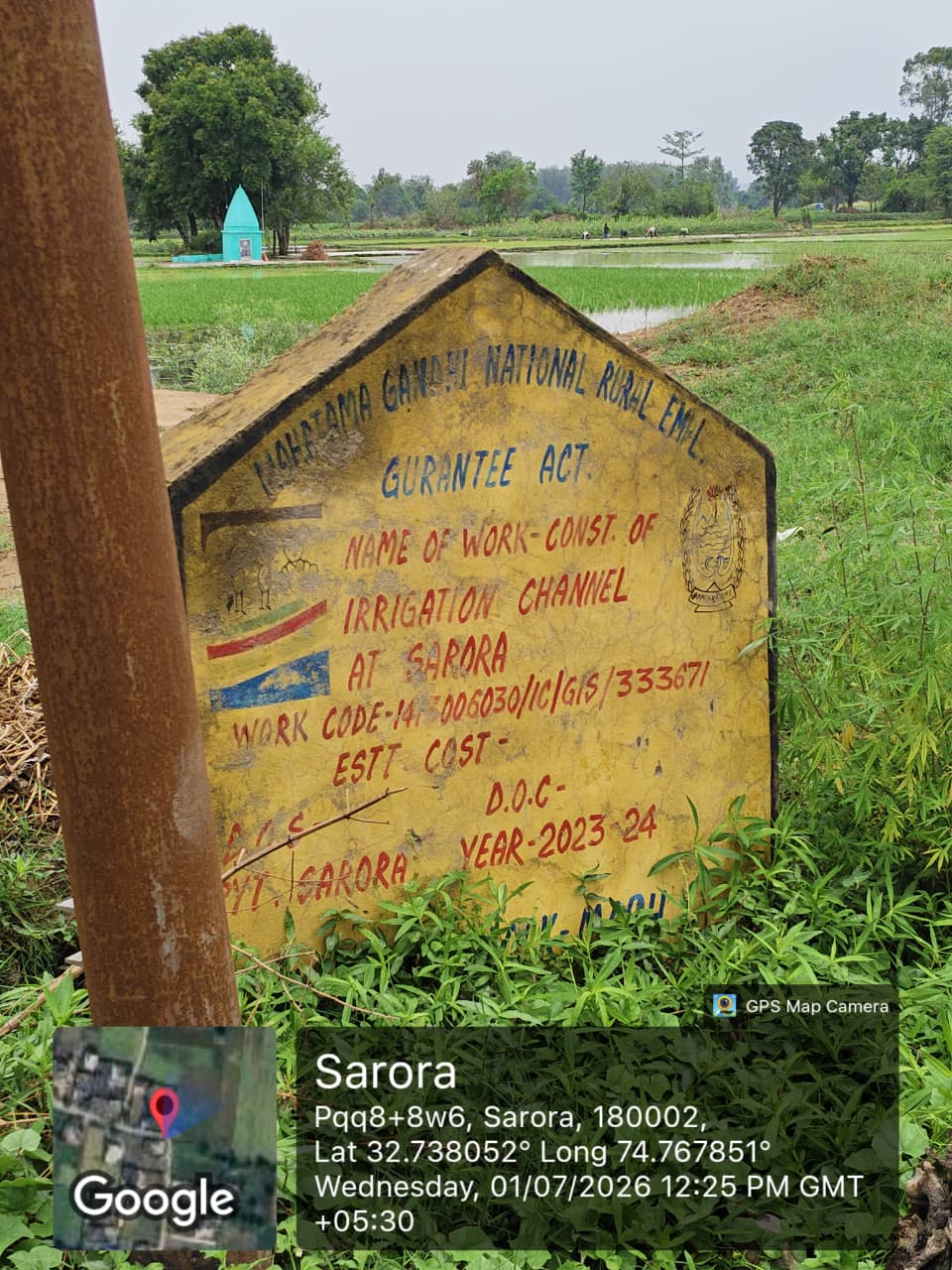
With improvements in infrastructure, education, sanitation, digital connectivity, and rural development programmes, Sarora continues to progress while preserving its cultural heritage. Government initiatives aimed at strengthening agriculture, improving public services, and enhancing rural infrastructure are expected to contribute to the village's sustainable development. As a result, Sarora stands as a promising example of balanced rural growth in the Jammu region.
Conclusion
Sarora Village exemplifies the harmonious blend of cultural heritage, religious significance, and rural development in the Jammu region. With its strong agricultural foundation, vibrant Dogra traditions, and deep-rooted spiritual beliefs, the village continues to preserve its unique identity while embracing modern infrastructure and public services. The presence of an active Gram Panchayat, improving educational facilities, better connectivity, and essential amenities has contributed to the overall well-being of its residents. As development initiatives continue to expand, Sarora is well-positioned to achieve sustainable growth while maintaining the values, traditions, and community spirit that define its character.
Photos
Videos

Location Map
Amenities
- Website
Contact Information
| Address |
Block Marh, Sarora, Jammu Pincode -180002 |
| Phone Number |
8082206512 |
| Email Address | |
| Website | https://jkpanchayat.jk.gov.in/homeview.php?panchayat=Sarora&block=Marh |
Reviews (7)

The village has a pleasant environment, friendly residents, and a rich cultural heritage. It offers a perfect blend of traditional values and modern development.

Great work! The project gives a clear and engaging overview of the village. The photos and videos make it even more informative.

Amazing work by the group! The project is detailed, creative, and enjoyable to explore. A well-executed project that showcases the village in a meaningful and attractive way. Great job!

The village is beautifully presented with detailed information and attractive visuals. It highlights the local culture, heritage, and natural beauty in an engaging way. Excellent work by the team!
Excellent village with a cooperative community and a beautiful rural environment. The Panchayat is doing good work in implementing government schemes and improving infrastructur.e
Nice work 👍


Such a beautiful place and greatly documented!!