
Description
1. Introduction: An Overview of Bhatiare Village
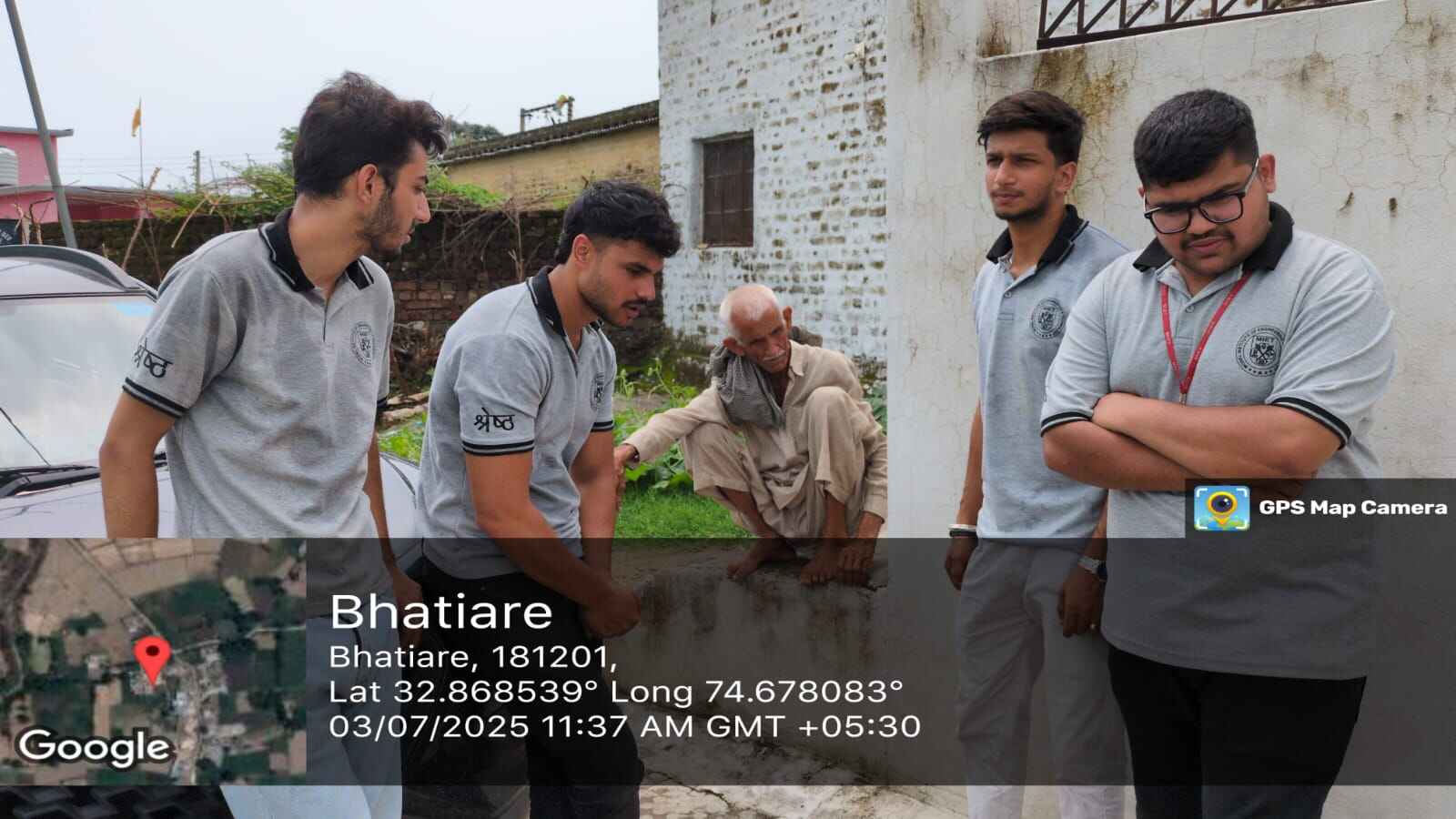
Bhatiare is a quaint and culturally rich village situated in the [Specify Block/District, e.g., Bhalwal Block, Jammu District] of the Jammu region, Union Territory of Jammu and Kashmir. Located near [Mention a well-known nearby landmark or town, e.g., the outskirts of Jammu city/near the Tawi River], the village serves as a beautiful representation of the region's traditional lifestyle, deep-rooted spiritual beliefs, and distinct cultural heritage.
Project Objective: The primary goal of this community outreach project was to document and understand the socio-cultural landscape of Bhatiare, focusing on its history, religious sites, local cuisine, and unique traditions, thereby preserving and sharing knowledge about this community.
2. Geographical and Historical Significance
-
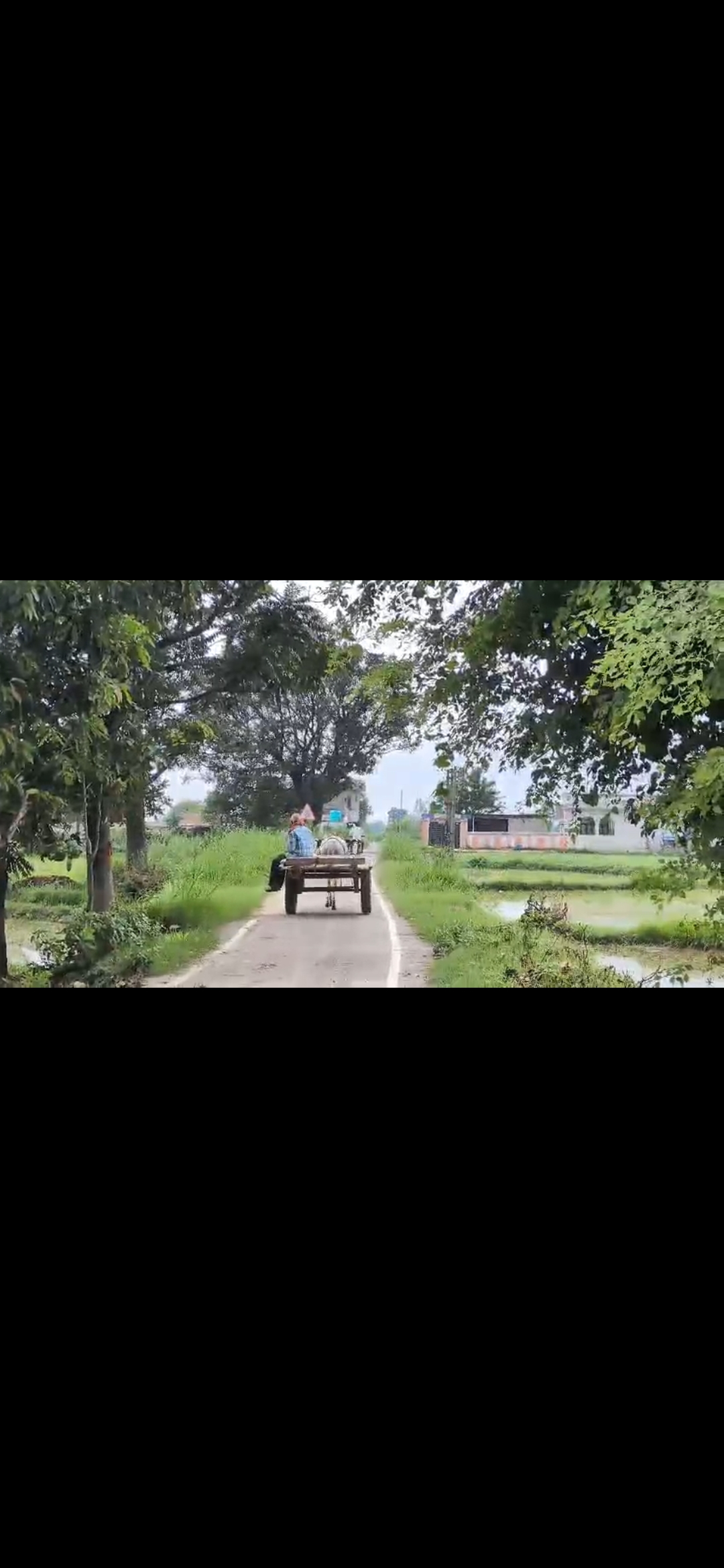
Location: Bhatiare enjoys a serene location, often characterized by [Describe the terrain, e.g., undulating hills, fertile plains, or proximity to a water body]. Its proximity to the main city allows it to maintain its rural charm while benefiting from accessibility.
-
Historical Context: The village has a history primarily tied to the Dogra culture of the Jammu region. [If you found any specific historical facts during your visit, insert them here. Example: The village is believed to be one of the older settlements in the area, historically serving as a small agricultural hub.]
3. Spiritual and Religious Landmarks
Bhatiare is known for its strong religious fervor, reflected in its beautiful and revered temples.
A. The Famous Temple: Shree Sai Baba Mandir
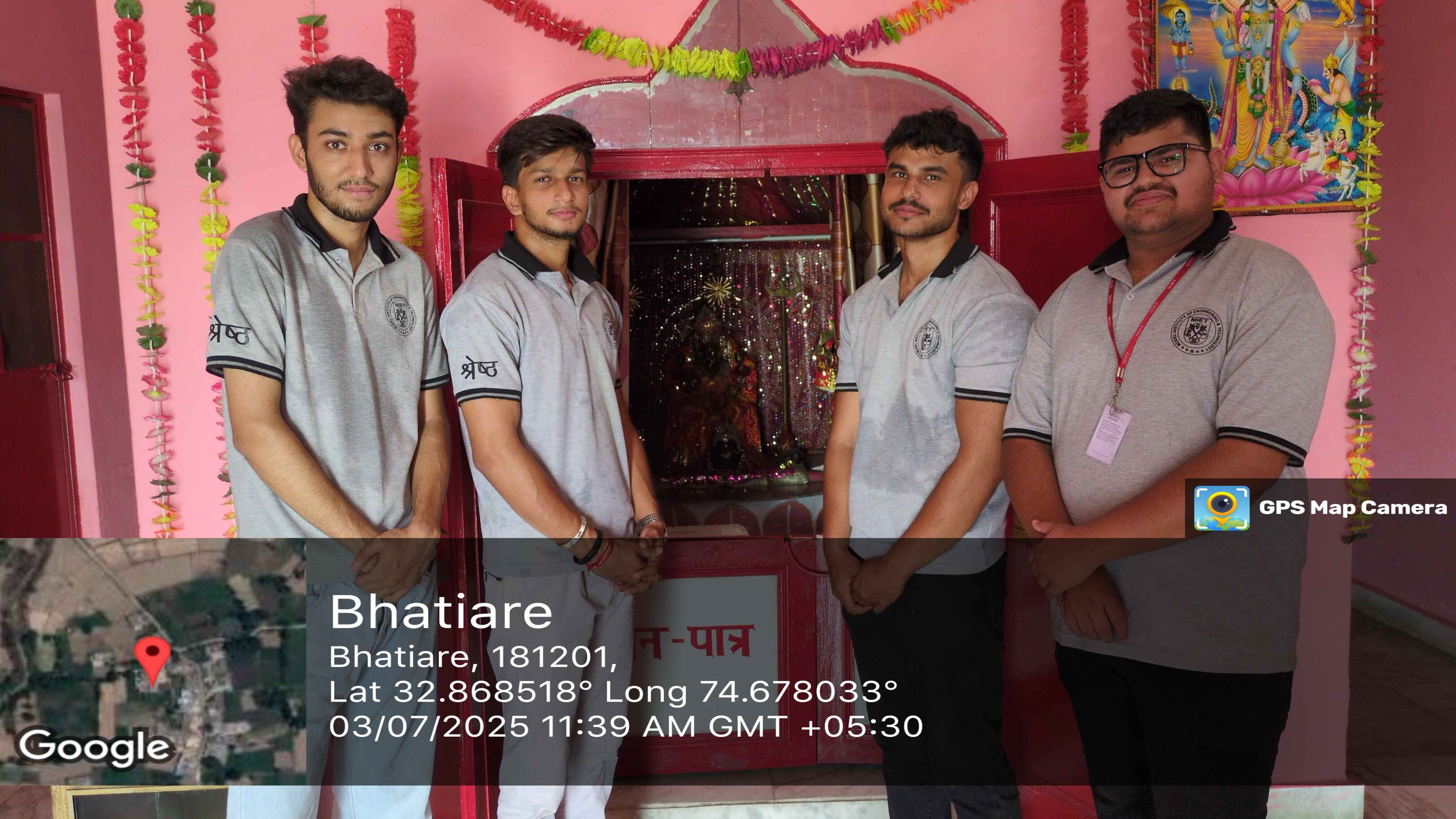
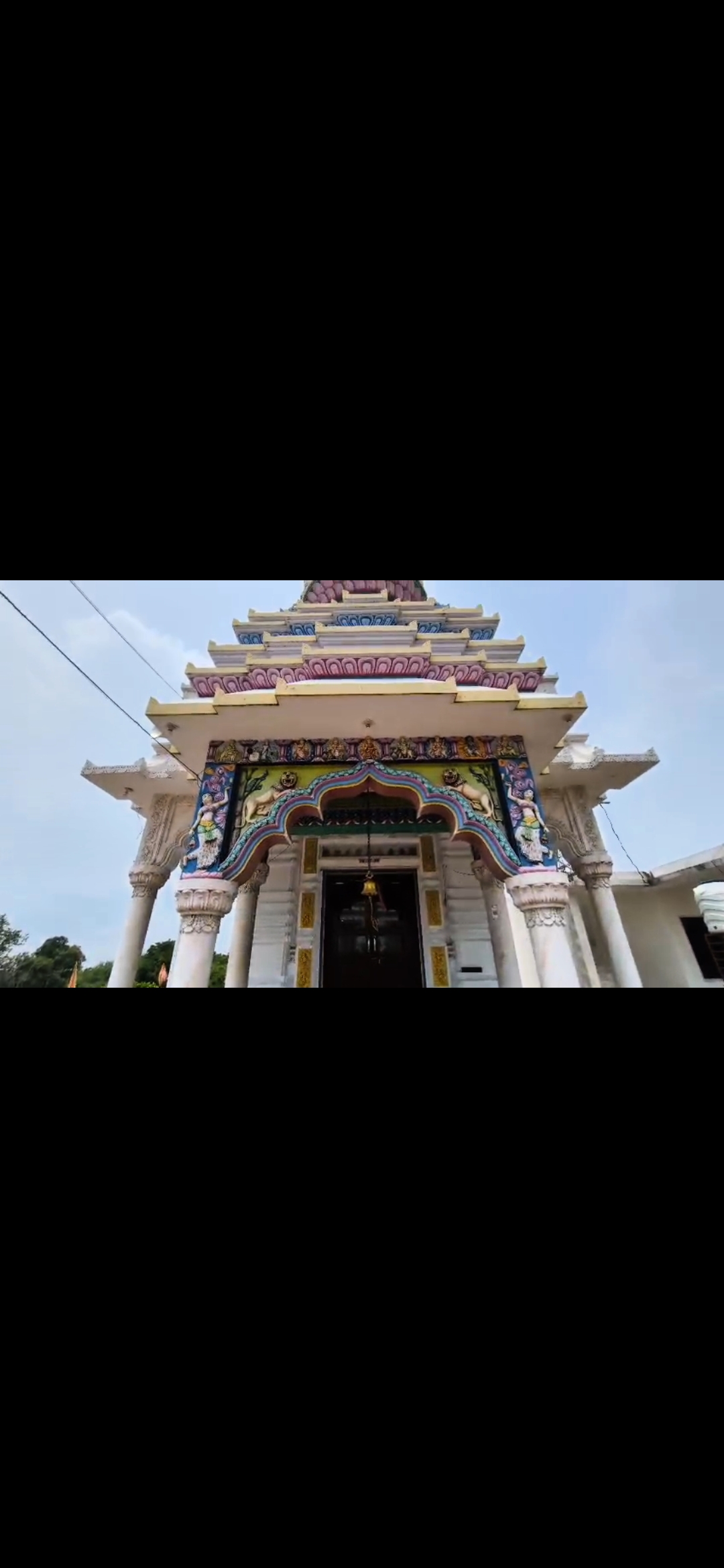
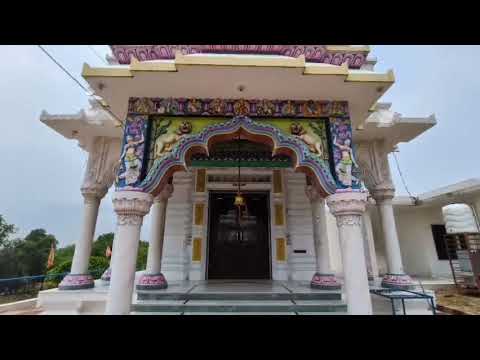
The most prominent spiritual center in Bhatiare is the Shree Sai Baba Mandir.
-
Significance: This temple is not just a place of worship but a significant community hub. It attracts devotees from Bhatiare and surrounding areas, particularly on Thursdays and during festivals like Ram Navami and Guru Purnima.
-
Architecture: The temple complex is generally characterized by [Describe the architecture, e.g., simple, modern structure, dome-shaped roof, marble flooring] and often includes a Dharamshala (rest house) or community kitchen for visitors.
B. Other Sacred Sites
-
Villagers also worship at local Devi/Devta shrines (smaller, often ancient shrines dedicated to local deities), which are integral to the daily religious life and rituals of the community.
4. Culture and Tradition (Dogra Heritage)
The culture of Bhatiare is deeply rooted in the Dogra heritage of the Jammu region.
-
Language: The primary language spoken is Dogri, a melodic language recognized under the Eighth Schedule of the Indian Constitution.
-
Traditional Dress:
-
Men: Often seen in Pajamas and Kurta. Turbans (Pagri) are still worn by older men on formal occasions.
-
Women: Wear the traditional Saloar-Kameez and Dupatta/Chunni.
-
-
Festivals: The village celebrates all major Hindu festivals with great enthusiasm.
-
Lohri/Makar Sankranti: Celebrated with bonfires and traditional songs (Chajja dance).
-
Navaratri & Dussehra: Marked by prayers and community gatherings, reflecting the reverence for Goddess Durga.
-
Baisakhi: The harvest festival, celebrated with traditional Dogri Nacch (dance).
-
-
Music and Dance: The community retains a love for folk music and dances, including traditional Dogri songs often performed during weddings and festivals.
5. Local Cuisine (The Food of Bhatiare)
The food of Bhatiare is typical of the hearty and flavorful Dogra cuisine.
-
Staple Diet: The diet revolves around wheat, rice, and pulses (lentils).
-
Famous Dishes:
-
Rajma Chawal: A staple and much-loved combination of red kidney beans cooked in a rich gravy, served with rice.
-
Khatta Meat/Kaladi: While mutton dishes like Khatta Meat (sour mutton) are popular on special occasions, Kaladi (an indigenous cheese of the Jammu region) is a unique local delicacy often eaten with bread or in curry form.
-
Madra: A creamy lentil or vegetable curry, typically cooked in curd-based gravy, often served during feasts and religious langars.
-
-
Local Sweet: Patisa (a flaky, crispy sweet) is a popular local confection.
6. Conclusion and Key Learnings
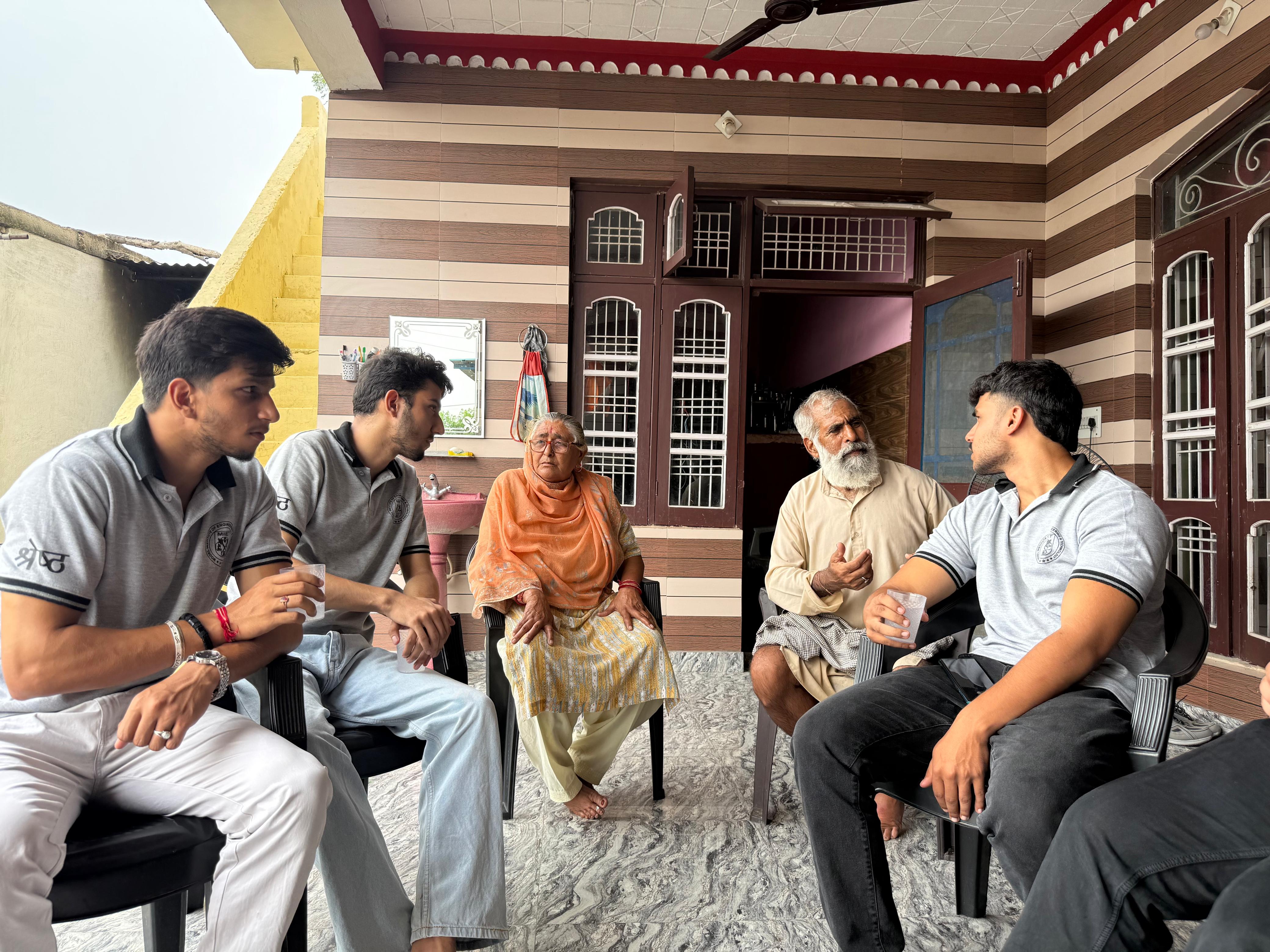
The visit to Bhatiare Village offered valuable insights into the resilience of traditional Dogra culture in a rapidly modernizing world. The village community is characterized by its warmth, strong spiritual values centered around places like the Shree Sai Baba Mandir, and a commitment to preserving its unique culinary and cultural identity. The project successfully documented these elements, providing a rich cultural profile of a small but significant part of the Jammu region.
Photos
Videos
Location Map
Contact Information
| Address |
https://maps.app.goo.gl/xhi1C1w6zSmKCaQk6 |
| Phone Number |
9103255689 |
| Email Address | |
| Website | https://villageinfo.in/jammu-&-kashmir/jammu/akhnoor/bhatiare.html |